How Antelope Canyon Was Formed (and Why It Glows)
Flash-flood water, wind, and Navajo Sandstone: how the slot canyons near Page took their shape, why the walls glow orange and purple, and what the canyon means to the Navajo people.
 By Daniel Begay, Navajo guide & Southwest canyon specialist
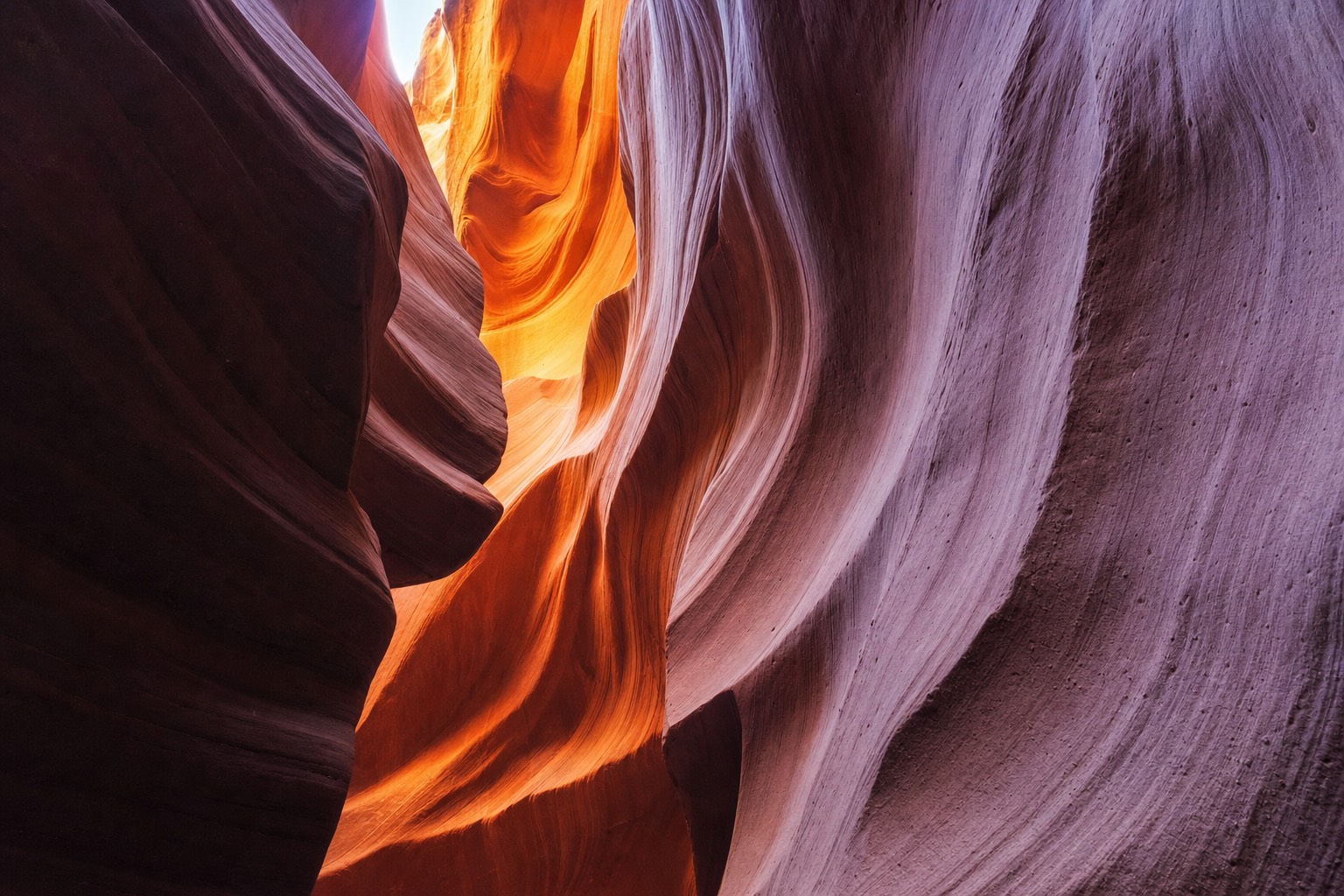
People stand in front of these walls and ask their guide the same two questions, in the same order: how did this happen, and why does it glow like that? I have spent my working life guiding on Navajo land, and I love these questions because the true answers are better than the postcard ones. The canyon was carved by the same water that can still kill in it, and the glow is a trick of geometry that no photograph fully survives.
Quick take: Antelope Canyon is Navajo Sandstone carved by flash-flood water and smoothed by wind, over spans of time far beyond a human scale. The floods still run, which is why monsoon season closes tours. The glow is bounce light: sunlight ricocheting down sculpted walls, with vertical beams dropping through the ceiling slit midday in season.
What kind of rock is the canyon carved from?
Navajo Sandstone: ancient dune sand pressed and cemented into stone, tinted through the oranges and reds you see on the walls. It is soft enough for water to carve into flowing curves, yet strong enough to hold a slot barely shoulder-wide and stories deep without collapsing.
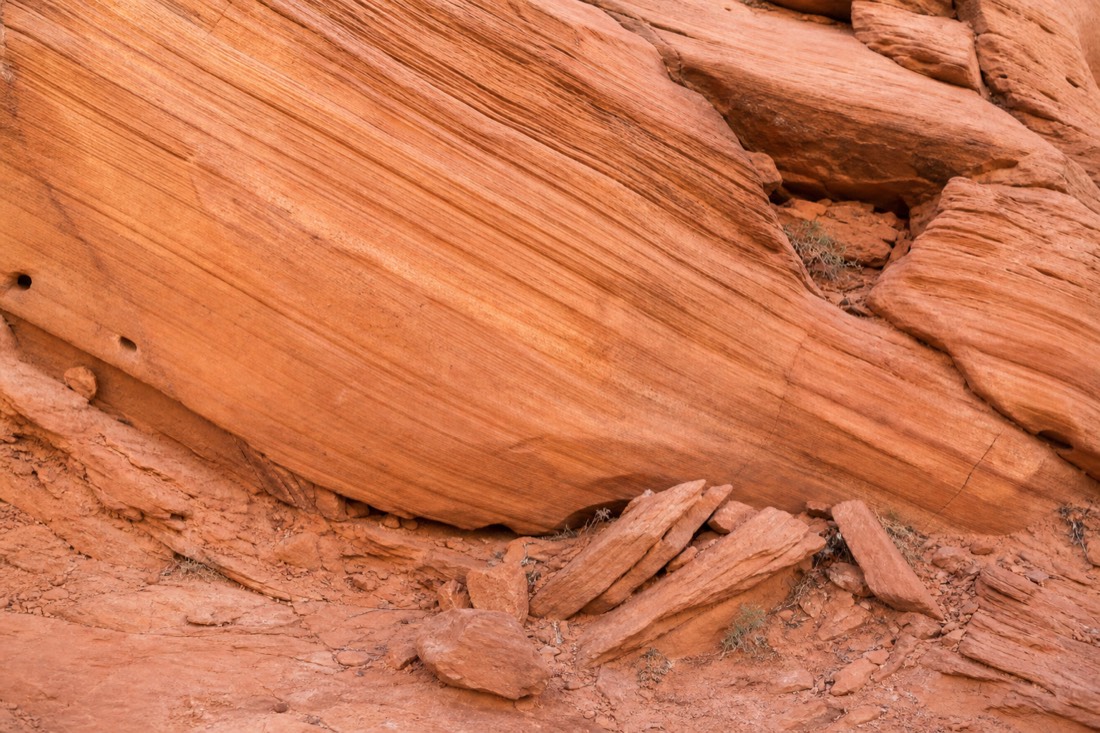
Look closely at the walls on any tour and you can read the rock's biography. Those sweeping diagonal lines running through the stone are the faces of old dunes, frozen mid-migration and buried, then cemented into sandstone. The color comes from iron minerals staining the grains, which is why the palette shifts along a single wall from pale gold to deep rust.
That particular balance of soft and strong is the whole story. Harder rock would resist the water and give you a plain gorge. Softer material would slump and bury itself. Navajo Sandstone sits in the narrow band where rushing water can sculpt but the sculpture holds, and that is why this corner of the plateau, the country around Page, grows slot canyons the way other places grow ordinary washes.
How did water carve a slot this narrow and this deep?
Flash floods did it, not a gentle stream. Storm water funnels off the plateau into a narrow channel, picks up sand and rock, and scours the sandstone like liquid sandpaper, cutting down and sideways in violent pulses. Repeat over vast spans of time and a crack becomes a corridor.
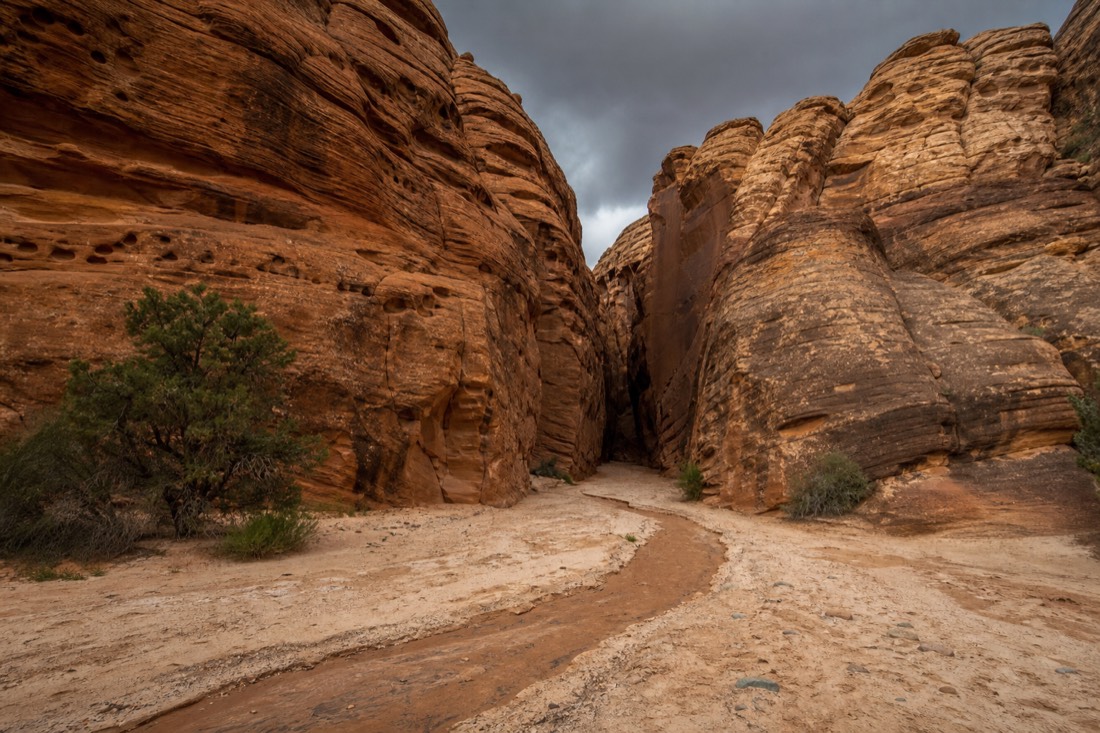
There is no permanent river here. The carving happens in bursts: a storm miles away sends a wall of sand-loaded water down the drainage, and for a few hours the canyon becomes the violent workshop that made it. Between floods, wind takes the shift, polishing edges and softening curves. The result is stone that looks poured rather than broken.
| Force | What it does | What you see today |
|---|---|---|
| Flash-flood water | Cuts downward and sideways in fast, sand-loaded pulses | The depth, the narrowness, the flowing wave shapes |
| Sand and debris in the water | Acts as the abrasive that does the actual grinding | Polished, rounded surfaces instead of sharp fracture faces |
| Wind | Smooths and fine-polishes between floods | The silky texture the walls are famous for |
| Time | Multiplies small events into a landform | A corridor deep enough to swallow daylight |
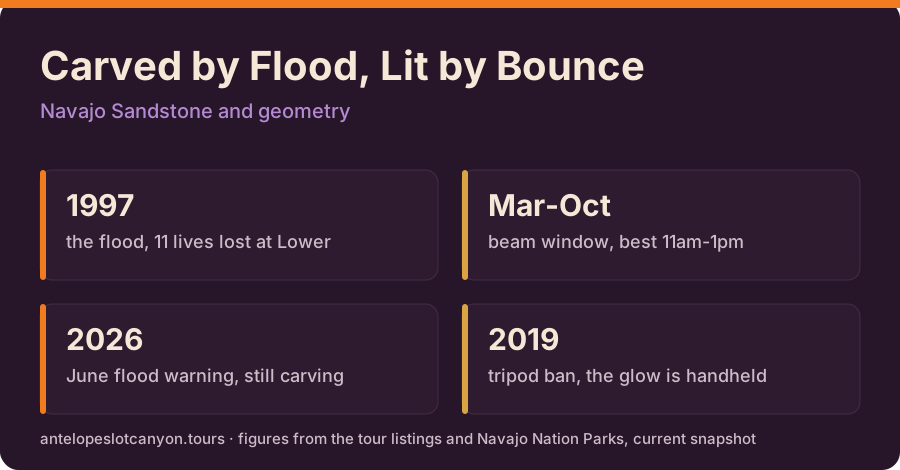
Hold both truths at once: the sculptor is still on the job. The same monsoon floods that shaped these walls closed tours as recently as this season, and the 1997 flood in the Lower section killed eleven people. That is why every modern tour watches weather upstream and cancels without apology, a system I explain properly in the flash floods guide. The beauty and the danger are the same process on different days.
Why does the canyon glow instead of just being dark?
Because almost no light inside the canyon is direct. Sunlight enters through the slit far above, then bounces wall to wall on the way down, and every bounce off the sandstone warms its color. Deep sections glow orange and purple in light that arrives pre-filtered by the rock itself.
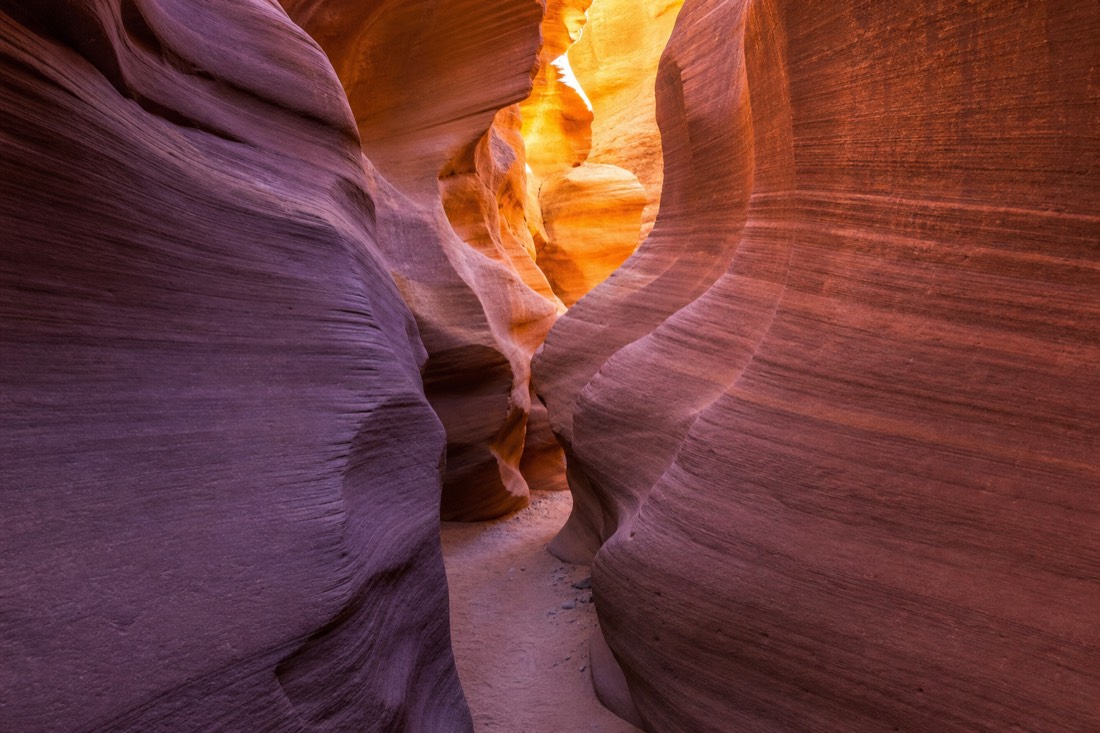
A slot canyon is, in effect, a light funnel lined with colored reflectors. The sculpted curves that the floods left behind are what make the glow possible: flat walls would bounce light once and lose it, while these curved surfaces pass it downward bounce after bounce, each one trading brightness for color. That is why the glow deepens as you look lower, and why the same chamber reads gold at one hour and violet at another as the sun angle shifts.
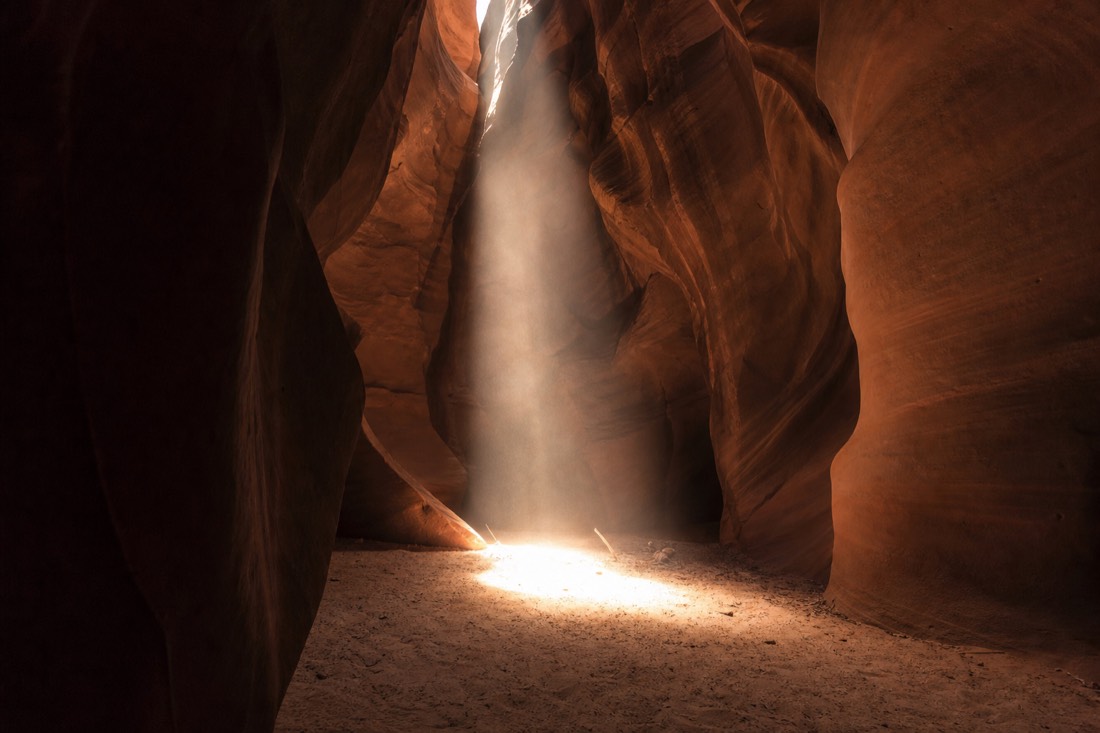
The famous vertical beams are the special case, not the norm. When the sun climbs high enough to align with the ceiling slit, midday in the warm months, a shaft of direct light drops to the canyon floor like a spotlight through a stage roof. The window on file runs late March through mid-October, best around 11am to 1pm, and only in the sections whose geometry allows it. The full mechanics and the honest odds live in the light beams guide.
Why do Upper, Lower, and Canyon X look so different?
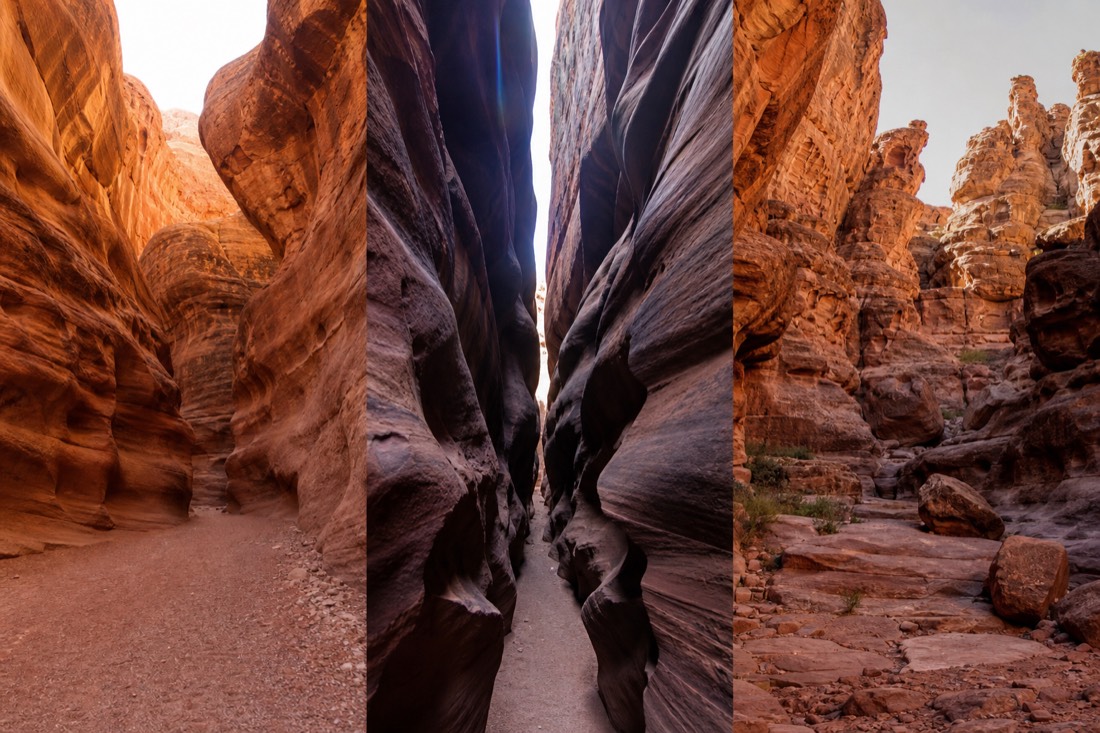
Because each drainage cut its own shape. Upper is a ground-level cathedral corridor that narrows toward the ceiling slit, which is why it hosts the beams. Lower is a V-shaped slot you descend into on ladders, walled in stacked waves. Canyon X runs rawer and quieter, reached by a hike in.
| Section | Shape the floods left | What that means for your visit |
|---|---|---|
| Upper | Cathedral-style corridor, wide at the floor, narrowing to a slit above | Flat sandy walk; the beam stage in season; the most accessible surface |
| Lower | V-profile slot, entered from above on stairs and ladders | More movement and climbing; wave-stacked walls; deeper-feeling passage |
| Canyon X | Rawer slots reached by a real hike in | Variable terrain, smallest crowds, more of an earned arrival |
Same rock, same forces, three different sculptures: the variables are how much water each drainage gathers, how the initial cracks ran, and how each channel funnels its floods. Which shape deserves your one booked slot is the most common question I get, and I argue it out properly in the Upper versus Lower guide. Travelers who want the quiet third option should read my Canyon X post before deciding.
What does the canyon mean to the Navajo people?
It is a sacred place on Navajo Nation land, not a theme park that happens to be beautiful. Access is guided-only through authorized Navajo operators, and the expectations are simple: stay with your guide, do not climb or wander, and treat the canyon as a place that commands respect.
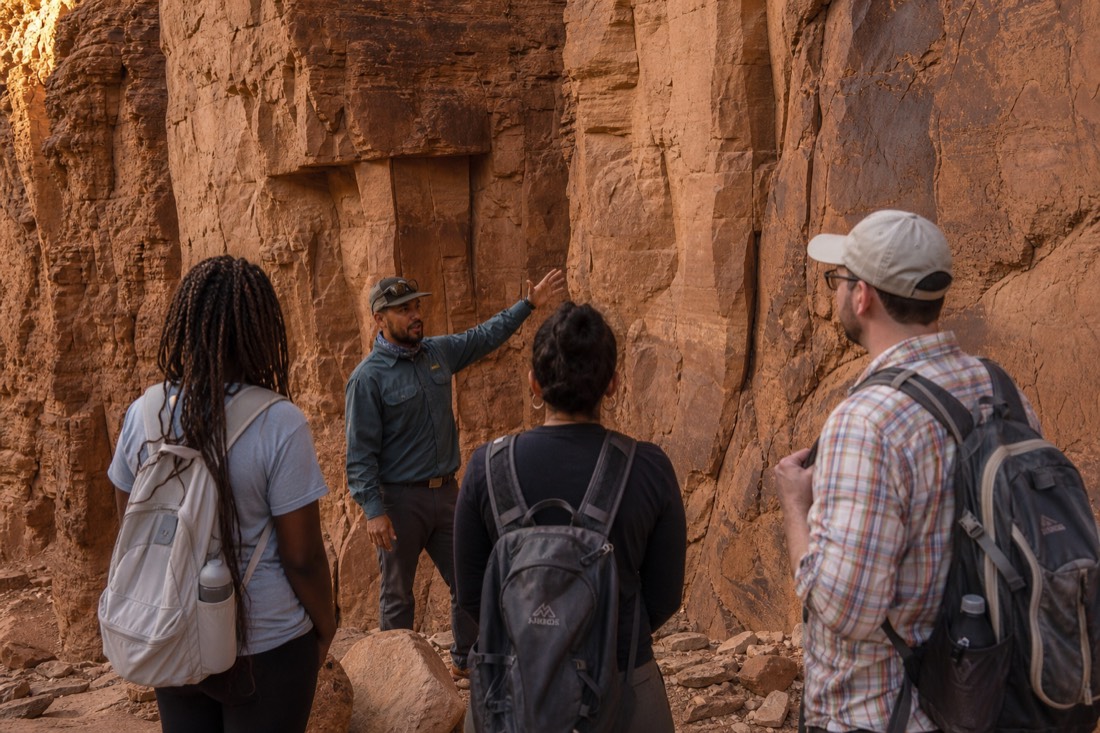
I speak here as a Navajo guide, because this is the part of the story I carry personally even though these particular canyons are not my beat. The land is not scenery to us. The guided-only rule, listed plainly by Navajo Nation Parks & Recreation, exists for safety after 1997, and it also keeps the canyon in relationship with the people it belongs to. The $15 per person tribal permit supports that stewardship. Drones and alcohol are prohibited on Navajo Nation land, full stop.
None of this should feel like a burden. Arizona's own tourism office frames it well in its guide to visiting the canyon the right way: come as a guest, and the visit gets better, not worse. The guides who walk you through are the descendants of the people who have known this land longest, and the stories they tell inside the canyon are part of what you came for, whether you knew it or not.
When should you visit to see the glow at its best?
Match the light to what you want. Beams need late March through mid-October, midday, in the Upper section. The soft all-over glow is strongest in even bounce light, which winter delivers all day and shoulder seasons deliver generously. There is no bad light down there, only different sculptures of it.
| You want | When to go | The honest note |
|---|---|---|
| The vertical beam | Late March to mid-October, around 11am to 1pm, Upper | Never guaranteed; clouds veto the sun |
| Rich, even glow on every wall | Winter, or morning and afternoon slots year-round | Softest contrast, easiest on phone cameras |
| Glow plus the fewest people | Winter midday | See my winter deep dive for the full trade |
If the beam is your reason, the section built for it is Upper: read the Upper Antelope tour page, then check live availability and prices on Viator. A 4.5 from 2,726 reviews says the room under the slit delivers. Cancellation depends on the exact ticket: the checked AACT Upper and Lower Viator listings allow a full refund when canceled at least 24 hours ahead. Canyon X on Viator is nonrefundable for customer cancellations, while the checked GetYourGuide Canyon X listing allows cancellation at least four days ahead. Reconfirm the chosen option at checkout.
Stand in the corridor and you are inside an unfinished sentence. The floods that wrote it still come every monsoon, the wind is still editing, and the glow you photograph is sunlight taking the long way down through stone that used to be dunes. My call: learn the story before you go. The canyon is beautiful to everyone, but it is legible only to visitors who know what they are reading.
Your next booking step
Lower Antelope with a Navajo guide
Have a travel date in mind? A timed walk among Lower’s sculpted walls, with entry and the Navajo permit included. Check the date before arranging the rest of this part of your trip.
General starting point — confirm the exact party and date
Select a date to load the Viator schedule. Availability and final price are confirmed on Viator.
Check dates for Lower Antelope with a Navajo guide
Ken’s Tours, Lower entrance; arrive 30 minutes early. Return to the same site. Steel stairs and narrow passages; no bags or tripods. Not recommended during pregnancy or with spinal/cardiovascular conditions. Customer cancellation: full refund at least 24 hours before departure; reconfirm at checkout.
Compare routes, adjust your plan & budget
Flash-flood water, wind, and Navajo Sandstone: how the slot canyons near Page took their shape, why the walls glow orange and purple, and what the canyon means to the Navajo people. These are different experiences, not interchangeable admission tickets. All listed guiding is in English.
A timed walk among Lower’s sculpted walls, with entry and the Navajo permit included. 60 minutes; English; from Page. Ken’s Tours, Lower entrance; arrive 30 minutes early. Return to the same site. Steel stairs and narrow passages; no bags or tripods. Not recommended during pregnancy or with spinal/cardiovascular conditions. Customer cancellation: full refund at least 24 hours before departure; reconfirm at checkout.
Upper’s beam corridor with a Navajo guide; fees and taxes included. 80 minutes; English; from Page. Adventurous Antelope Canyon Tours, Highway 98; arrive 30 minutes early. Return to the same base. Ages 8+; moderate fitness. Sandy walking and the outdoor stair/hill exit; no guaranteed beams. Not recommended during pregnancy or with spinal/cardiovascular conditions. Customer cancellation: full refund at least 24 hours before departure; reconfirm at checkout.
Two Canyon X sections on Taadidiin’s guided hiking route. Choose the hiking option. 90 minutes; English; from Page. Taadidiin Tours, Highway 98; arrive 30 minutes early, using Arizona/Phoenix time. Return to the same site. Steep access trail. Permit is listed as included but the API’s old fee amount conflicts with current operator information; confirm the final total. Guide service fee extra. No tripod on hiking option. Nonrefundable for customer cancellation on Viator; read the exact weather-cancellation terms.
Affiliate links: we may earn a commission at no extra cost to you. Schedule dates are not confirmed seats.