Antelope Canyon in Winter: What You Trade and What You Win
No light beams from mid-October to late March, but the softest light, the lightest crowds, and the easiest booking of the year. The honest winter trade, month by month.
 By Daniel Begay, Navajo guide & Southwest canyon specialist
Winter mornings on the Colorado Plateau start with frost on the truck windshield and a kind of silence the summer crowds never hear. I guide in Monument Valley, an hour and change east of Page, and winter is when this country feels most like itself. The question travelers keep sending me is whether Antelope Canyon in December or January is a consolation prize or a smart play. I pulled the operator calendars, the review patterns, and the seasonal facts on file, and the answer is clearer than most people expect.
Quick take: Winter takes the famous light beams off the table, full stop, from roughly mid-October to late March. In exchange you get soft, even light on the rock, the smallest crowds and lower prices of the year, and the easiest booking window on the calendar. Beam chasers should wait. Almost everyone else wins.
What do you actually give up by visiting in winter?
One thing, but it is the famous thing: the vertical light beams. They appear only from late March through mid-October, midday, when the sun climbs high enough to drop through the ceiling slits. Mid-October to late March the sun stays too low, and no operator can sell you around physics.
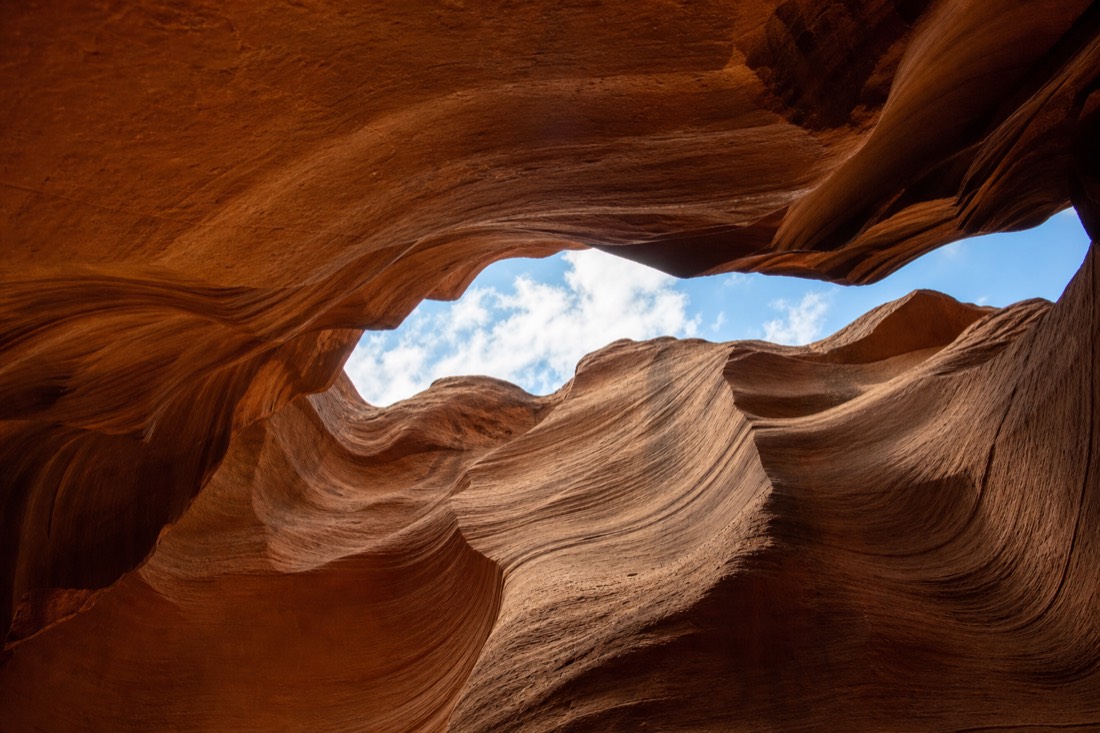
The beam is a sun-angle event. The facts on file put the window at late March through mid-October, with the best odds in the 11am to 1pm band, and even inside that window a cloudy day cancels the show. I break the whole mechanism down in the light beams guide, but the winter version is short: the sun never gets high enough, so the shafts never form.
Be honest with yourself about how much that image drives your trip. If your phone wallpaper is a beam photo and anything less will feel like failure, book beam season and accept its crowds. That is a legitimate choice. It is just not the only one.
What does the canyon look like without the beams?
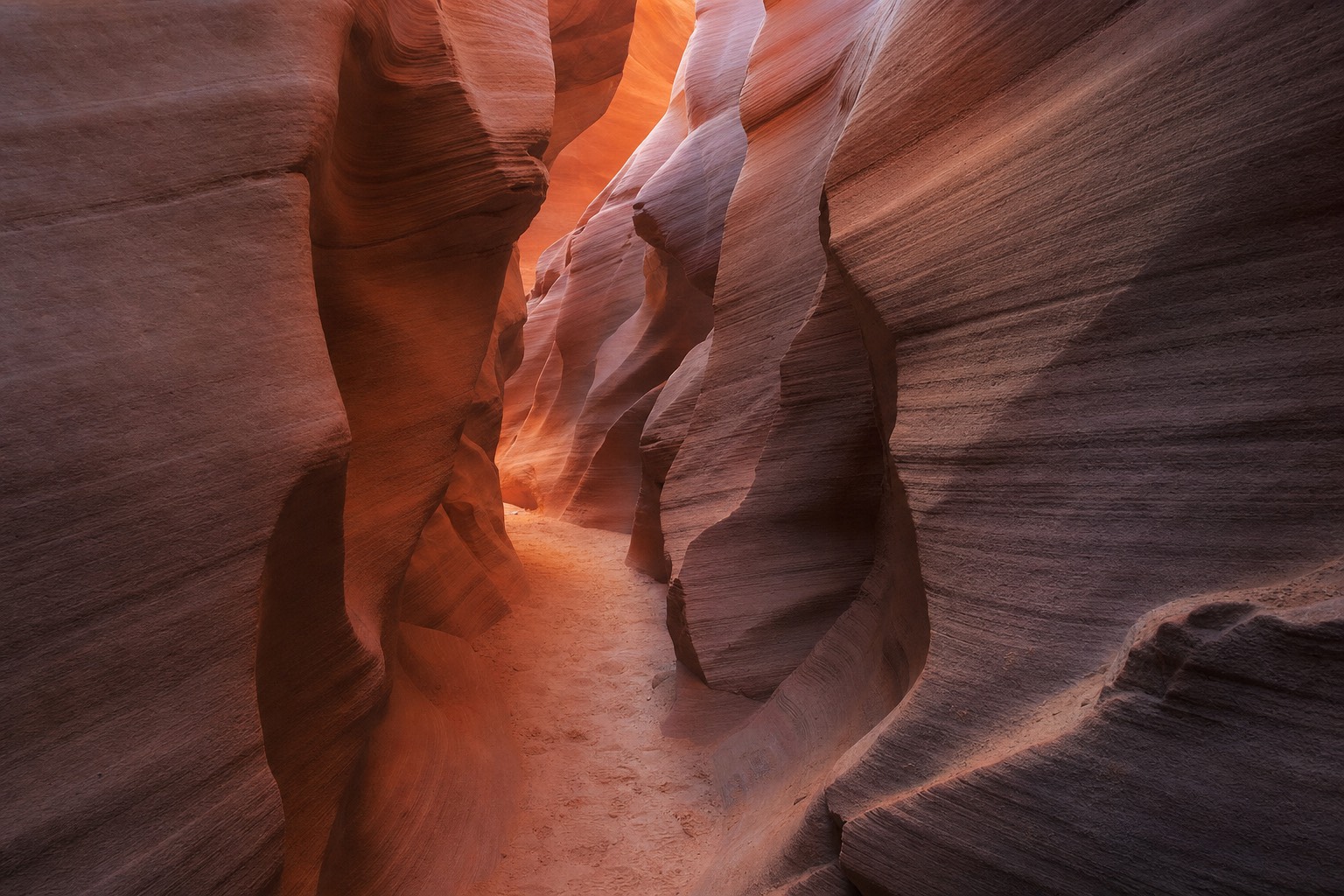
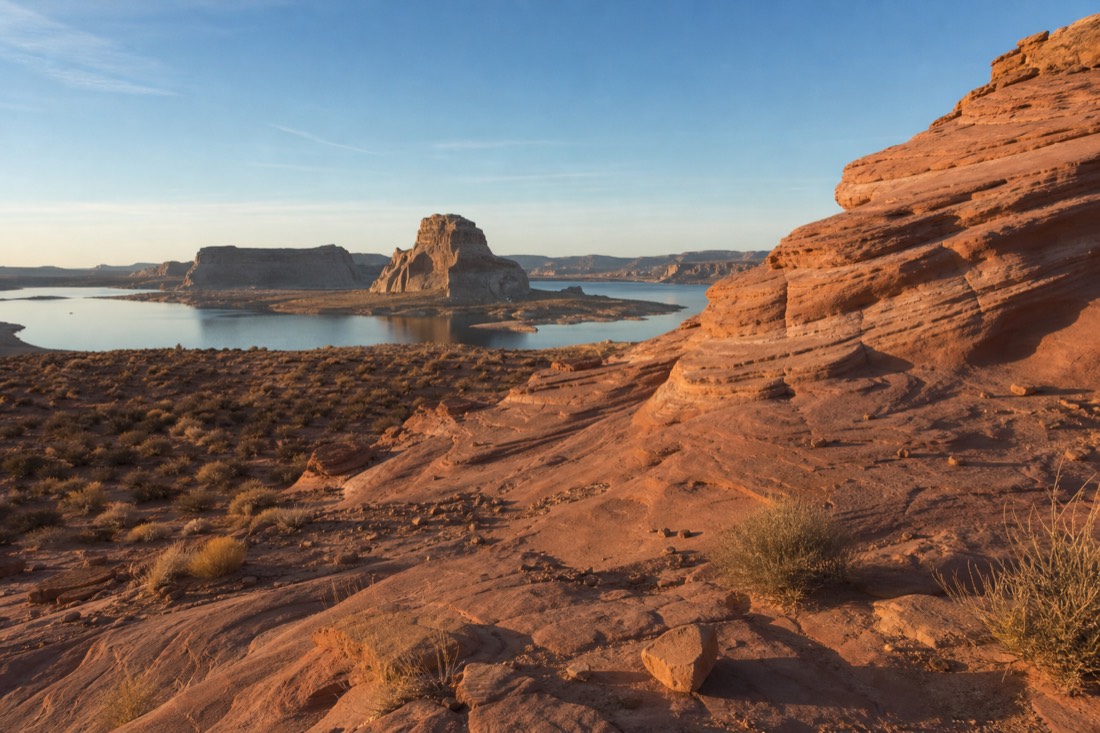
Lit like a lantern instead of a spotlight. Low winter sun bounces down the sandstone in soft, even light, so the walls hold color from floor to ceiling without the blown-out highlights and black shadows of summer. Visitors and photographers consistently describe winter walls as easier to shoot and easier to see.
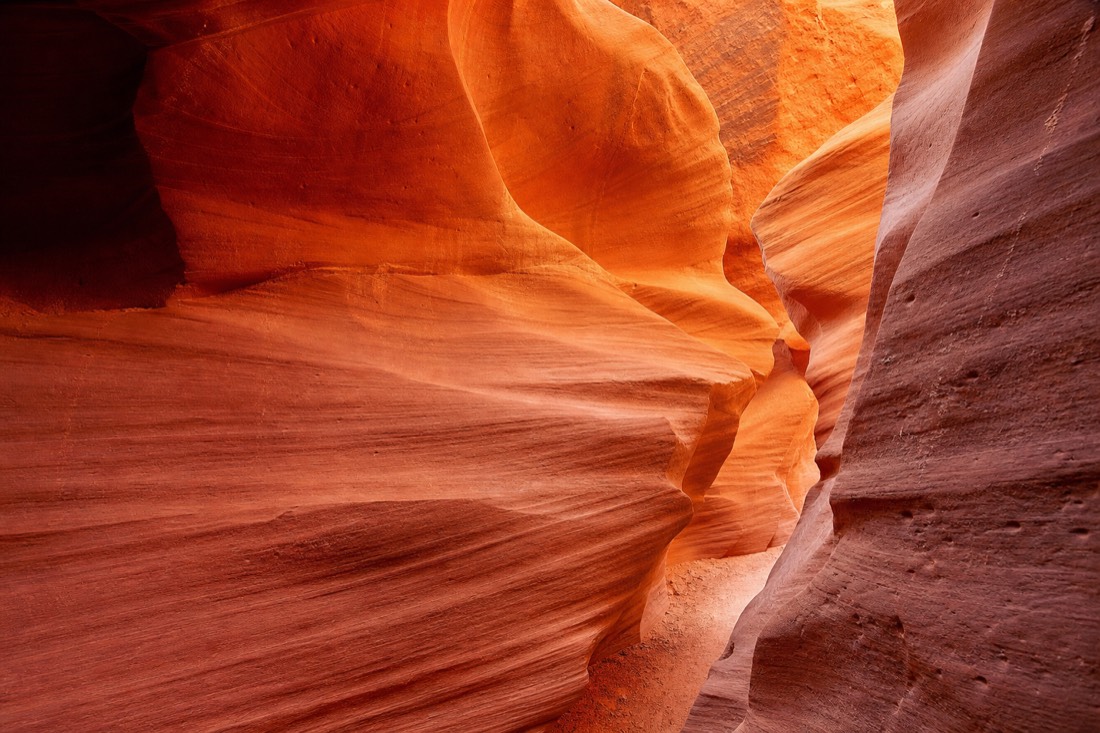
Here is the part the postcard economy undersells. The canyon's color never came from direct sun. It comes from light ricocheting between curved walls, picking up orange and purple as it falls. Direct midday summer sun creates spectacular beams and brutal contrast in the same stroke. Winter's lower sun feeds the walls nothing but bounce light, and bounce light is the flattering kind. The review record on Tripadvisor backs this up across seasons: the walls carry the experience with or without a beam.
For a camera, especially a phone, that means fewer decisions. No beam to expose for, no ten-stop gap between the bright slit above and the sand below. The full trade sits in one table:
| Factor | Beam season (late Mar to mid Oct) | Winter (mid Oct to late Mar) |
|---|---|---|
| Light beams | Possible midday, never guaranteed | None, at any hour |
| Light on the walls | High contrast, harsh at midday | Soft and even through the day |
| Crowds | Heaviest of the year, May through September peak | Lightest of the year |
| Prices | Peak-season bands | Lower bands, per the seasonal pattern |
| Booking lead time | Midday slots can sell out months ahead | Easiest of the year |
| Flash-flood cancellations | Real risk in monsoon, mid-June through September | Rare, though storms can still close a canyon |
| Time-zone confusion | One-hour gap in DST months | None, everyone is on MST |
How much quieter and cheaper is winter, really?
Quieter by the widest margin the calendar offers. The heavy season runs March through October, so winter sits entirely outside it: smaller groups, open corridors, and same-week availability that summer travelers would not believe. Prices drop to the softest bands of the year at the same time.
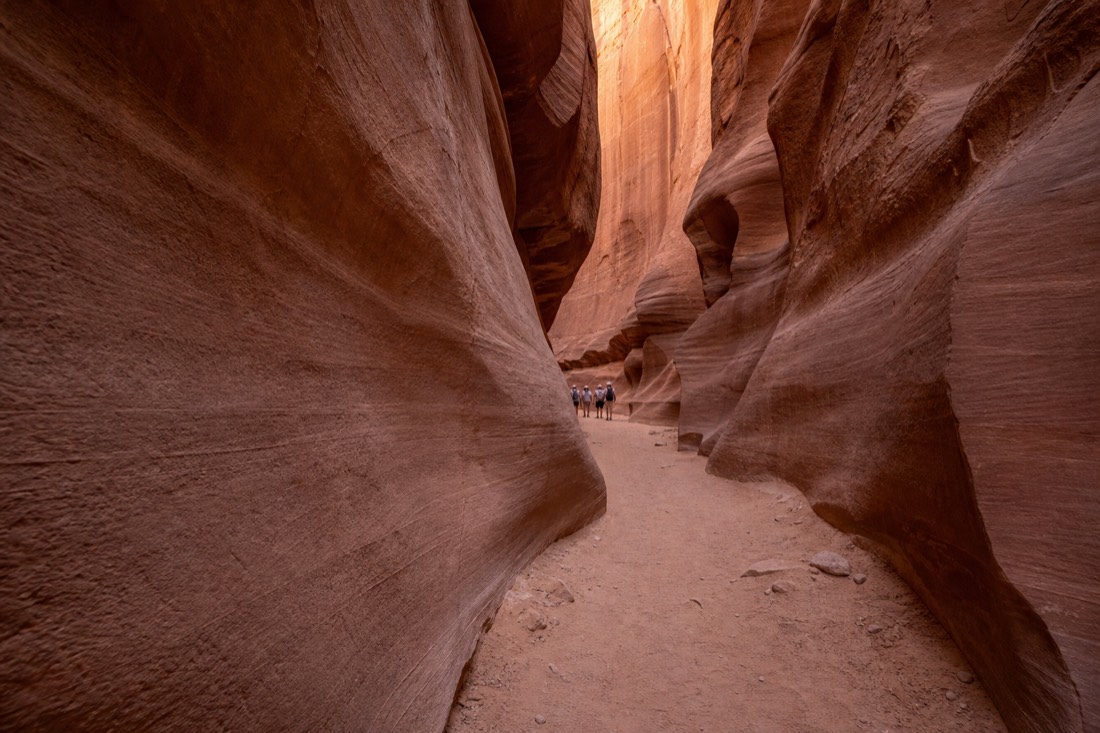
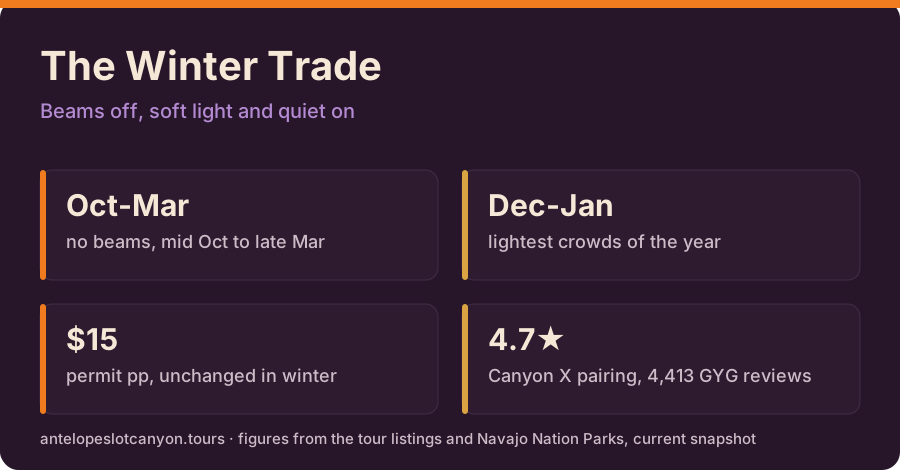
The crowding pattern on file is blunt: the March-to-October window carries the volume, and midday beam-season slots at Upper sell out months ahead in July. Winter inverts all of it. The guided-only rule still applies in every month, per Navajo Nation Parks & Recreation, and the $15 per person tribal permit does not take the season off. What changes is everything around those constants: group density, lead times, and the price band.
One quiet winter bonus almost nobody mentions. Page sits on year-round MST while the Navajo Nation observes daylight saving, so in summer there is a one-hour trap between your booking confirmation and the meeting point. In winter the clocks agree. The most common no-show mistake in this canyon system simply stops existing for a few months.
What is winter like month by month?
November empties fast and still carries mild afternoons. December and January are the true low season: the lightest crowds of the year, the coldest mornings, and the shortest daylight. February stays quiet while days stretch. March builds back toward the late-month return of the beams.
| Month | Beams | Crowds | What defines it |
|---|---|---|---|
| November | Gone since mid-October | Thinning quickly | Shoulder calm, mild afternoons, easy booking |
| December | None | Among the lightest of the year | Cold mornings, shortest daylight, compressed tour schedule |
| January | None | Lightest stretch of the calendar | Coldest starts, widest-open availability |
| February | None | Still light | Days lengthening, walls holding soft light |
| March | Return late in the month | Building week by week | Last quiet weeks, then beam season pricing and lead times resume |
Notice what the table implies about timing inside winter. Early November and late February are the sweet compromises: real winter quiet without the deepest cold. Deep December and January are for travelers who want the canyon as close to private as it gets. And late March is a coin flip that can land you the first beams of the year, a game I score properly in the best time to visit guide.
One planning note: daylight is short and operators compress their winter schedules around the middle of the day, so confirm your departure time with the operator rather than assuming the summer spread of slots exists.
What should you wear for a winter slot canyon tour?
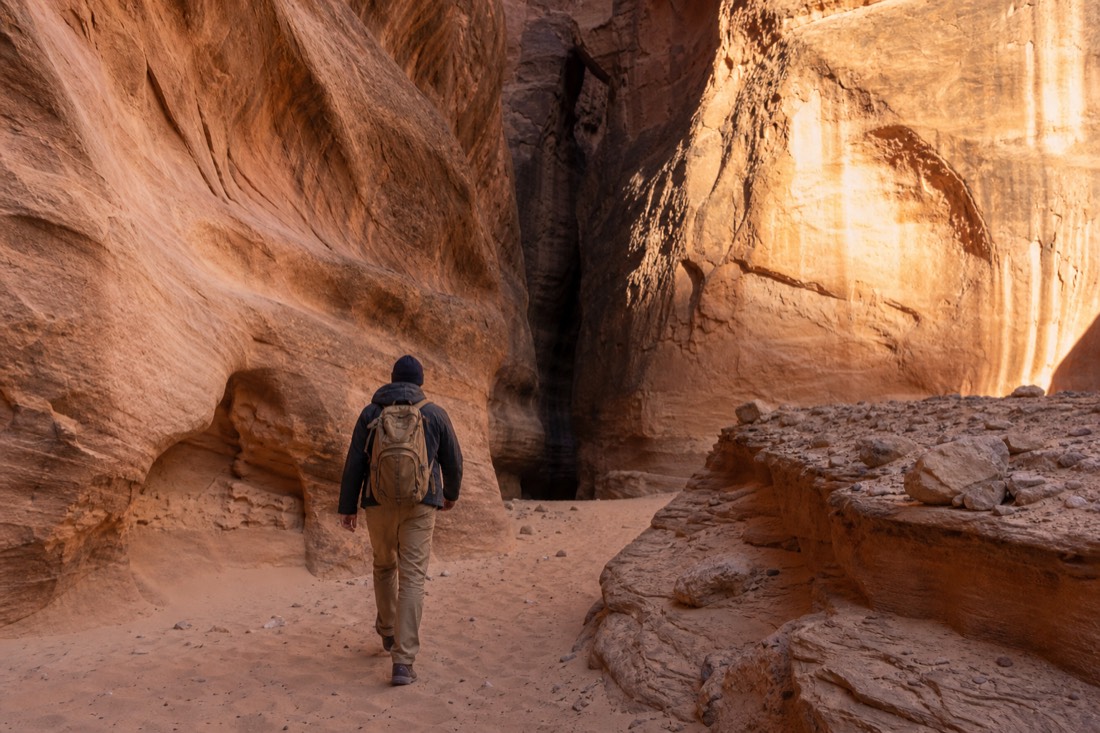
Layers built for a cold desert morning that turns mild by afternoon. The canyon floor is sand, the air inside stays cool and shaded, and open trucks or exposed walks to the entrance bite hardest. Closed shoes, a warm layer you can shed, and gloves for the first hour cover most of it.
| Item | Why it earns its place | Skip it if |
|---|---|---|
| Insulated jacket over layers | Cold mornings and shaded canyon air; peel it as the day warms | Never skip in Dec-Jan |
| Beanie and light gloves | Open-air rides and pre-tour waiting are the coldest parts | Afternoon-only tours in Nov or Mar |
| Closed shoes with grip | Sand floor, ladders at Lower, uneven hike-in at Canyon X | Never |
| Sunglasses | Low winter sun sits right in your eyes on the approach | Inside the canyon itself |
| Water | Dry air dehydrates in every season | Never |
| Big bags or tripods | Not allowed inside regardless of month | Always |
My full packing logic, season by season, lives in the what to wear and bring post. The winter-specific mistake I see in reviews is dressing for the air-conditioned car instead of the open desert at 8am. The second mistake is overcorrecting into ski gear and cooking by noon. Layers solve both.
Who should book winter, and who should wait for beam season?
Book winter if you are a photographer who hates strangers in frame, a budget traveler, or anyone who values the canyon over the single famous photo of it. Wait for late March through mid-October if the beam is the whole point of your trip. Both are honest answers to different questions.
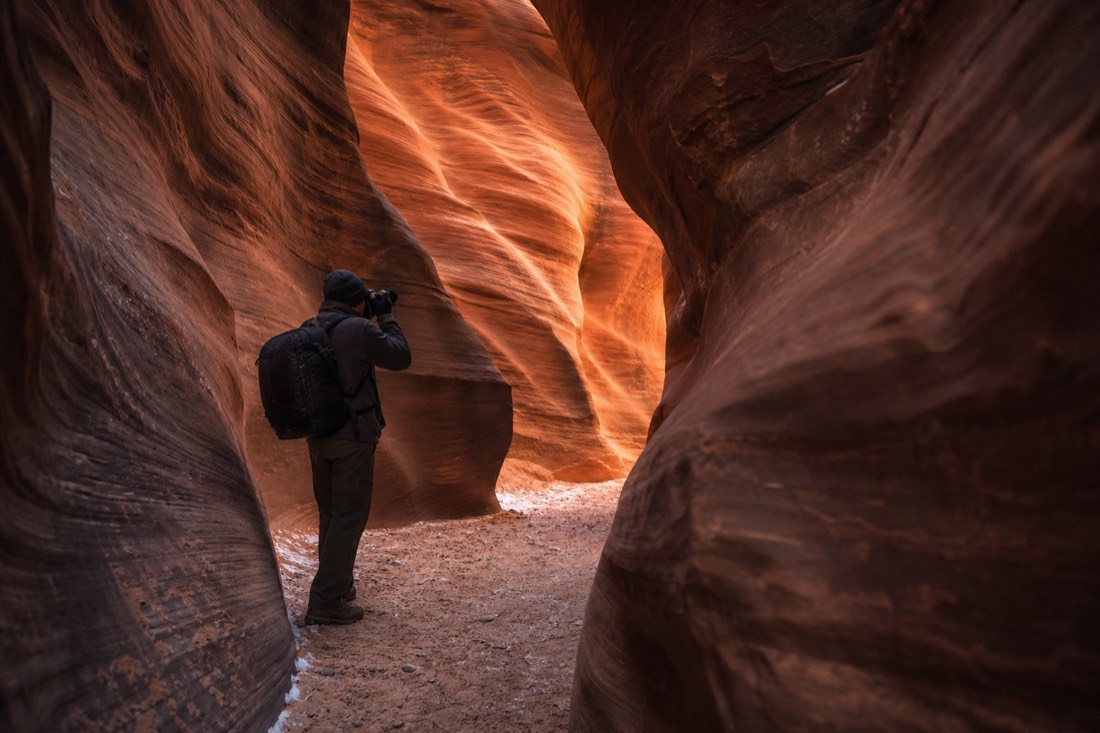
My call, as someone who watches this country empty out every November: winter is the connoisseur's season, and the way to push the advantage to its limit is to stack quiet on quiet. The famous sections are at their calmest, but the least-trafficked walk of all is the hike-in slot west of them. Read the Canyon X tour page for the full case, then check live availability and prices on GetYourGuide. A 4.7 from 4,413 reviews, and in January you may share the corridor with almost no one.
The beam will still be there next summer, and so will its queue. The version of the canyon that glows quietly for a handful of people in the cold months is the one most travelers never meet. Guides do not get to keep secrets long in this business. Consider this one shared.
Your next booking step
Canyon X hiking tour
Have a travel date in mind? Two Canyon X sections on Taadidiin’s guided hiking route. Choose the hiking option. Check the date before arranging the rest of this part of your trip.
General starting point — confirm the exact party and date
Select a date to load the Viator schedule. Availability and final price are confirmed on Viator.
Check dates for Canyon X hiking tour
Taadidiin Tours, Highway 98; arrive 30 minutes early, using Arizona/Phoenix time. Return to the same site. Steep access trail. Permit is listed as included but the API’s old fee amount conflicts with current operator information; confirm the final total. Guide service fee extra. No tripod on hiking option. Nonrefundable for customer cancellation on Viator; read the exact weather-cancellation terms.
Compare routes, adjust your plan & budget
No light beams from mid-October to late March, but the softest light, the lightest crowds, and the easiest booking of the year. The honest winter trade, month by month. These are different experiences, not interchangeable admission tickets. All listed guiding is in English.
Two Canyon X sections on Taadidiin’s guided hiking route. Choose the hiking option. 90 minutes; English; from Page. Taadidiin Tours, Highway 98; arrive 30 minutes early, using Arizona/Phoenix time. Return to the same site. Steep access trail. Permit is listed as included but the API’s old fee amount conflicts with current operator information; confirm the final total. Guide service fee extra. No tripod on hiking option. Nonrefundable for customer cancellation on Viator; read the exact weather-cancellation terms.
A timed walk among Lower’s sculpted walls, with entry and the Navajo permit included. 60 minutes; English; from Page. Ken’s Tours, Lower entrance; arrive 30 minutes early. Return to the same site. Steel stairs and narrow passages; no bags or tripods. Not recommended during pregnancy or with spinal/cardiovascular conditions. Customer cancellation: full refund at least 24 hours before departure; reconfirm at checkout.
Three hours to compose in Canyon X, with tripod and one camera bag allowed on the photography option. 180 minutes; English; from Page. Taadidiin Tours, Highway 98; arrive 30 minutes early, Arizona/Phoenix time. Return to the same site. Select the photography upgrade, not hiking. Ages 8+ per Taadidiin. Steep access; guide fee extra; confirm permit total. Does not visit Upper’s beam corridor. Nonrefundable for customer cancellation on Viator; read the exact weather-cancellation terms.
Affiliate links: we may earn a commission at no extra cost to you. Schedule dates are not confirmed seats.