Shooting Antelope Canyon on a Phone: What Actually Works
Standard canyon walks are handheld; Canyon X also offers a dedicated photography upgrade. When the light peaks, which canyon suits a phone, what guides do to help, and the respectful-shooting rules.
 By Daniel Begay, Navajo guide & Southwest canyon specialist
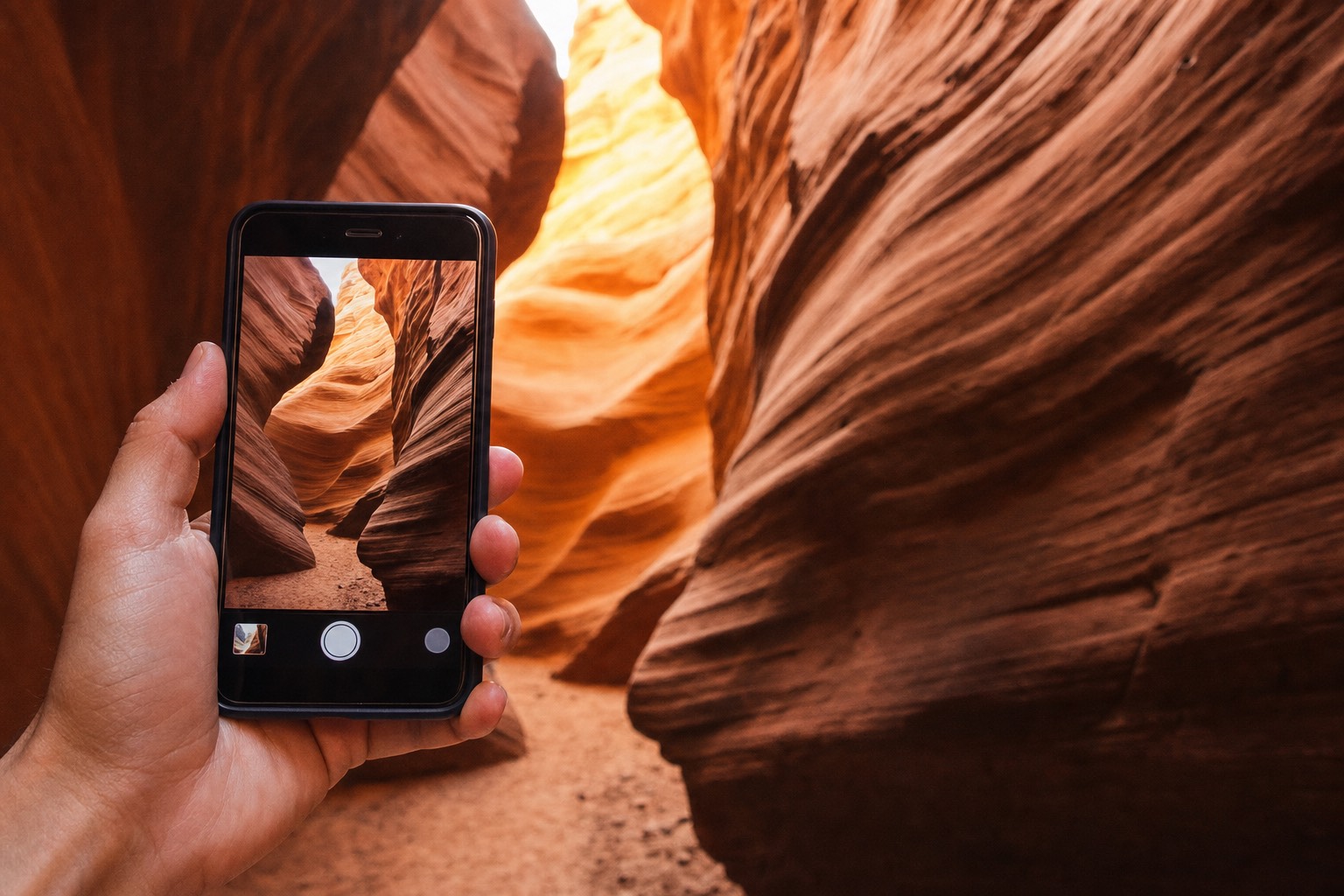
The gear arms race at Antelope Canyon is over, and the phone won by default. Standard sightseeing walks exclude tripods, monopods and selfie sticks; Canyon X’s photography option permits a tripod, The current three-hour Canyon X photography option permits a tripod and one camera bag, and every visitor now walks the same corridors with the same basic toolkit: two hands and whatever camera lives in their pocket. As a guide, I think the canyon is better for it. As someone who checks the listings and reviews for this site, I can tell you the phone shooters are doing fine.
Quick take: Antelope Canyon is a handheld-only, phone-friendly shoot. Book midday in beam season if light shafts are the goal, lean on your guide for the known photo spots, and pick your canyon by crowd tolerance: Upper for the beams, Lower for sculpted walls, Canyon X for room to compose in peace.
Can a phone really capture Antelope Canyon?
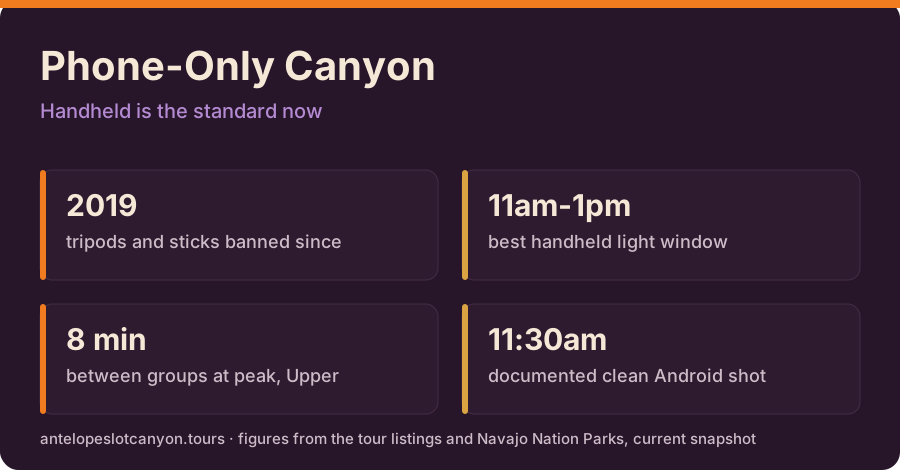
Yes, and post-2021 it is effectively the intended tool. Tripods and monopods are banned, The current three-hour Canyon X photography option permits a tripod and one camera bag, and visitor reports confirm strong phone results in the midday window, including a documented handheld Android shot at 11:30 in the morning.
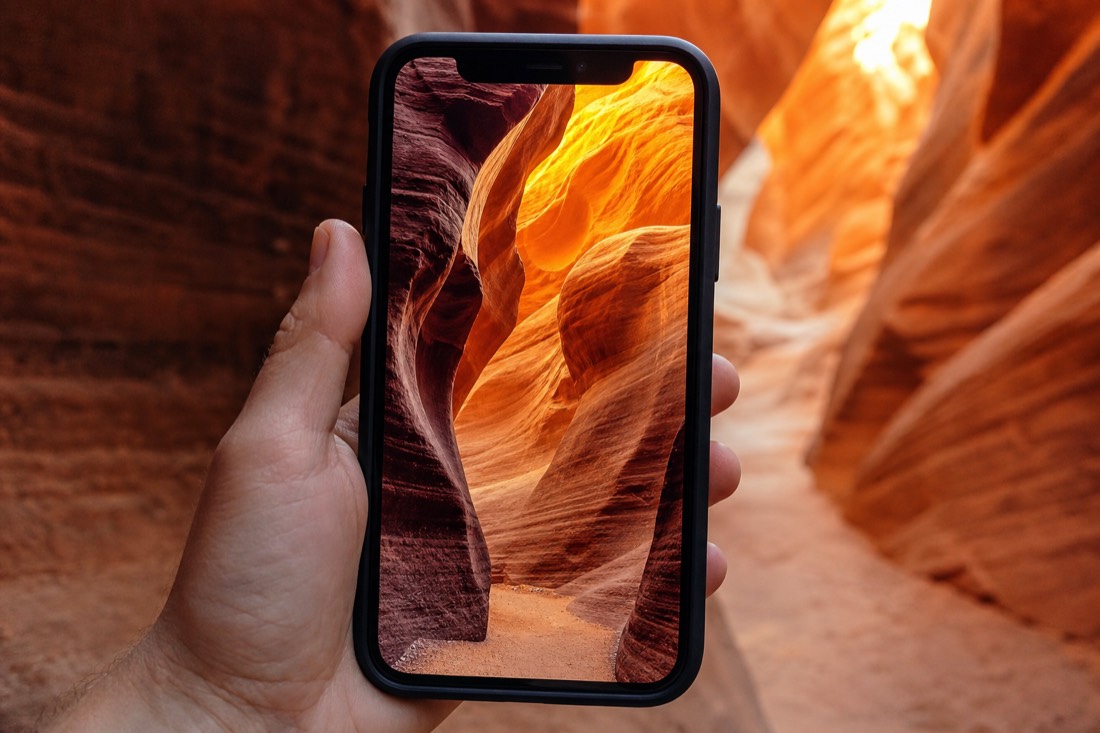
The slot canyon is close to an ideal phone subject. The light is dim but directional, the walls bounce warm reflected color from every side, and modern phone sensors handle exactly that situation with computational tricks a 2010s DSLR owner had to sweat for. The subject does not move. You are photographing thousand-year-old rock, and it will hold the pose.
Here is what the current rule set actually permits, so you pack accordingly.
| Gear | Status in the canyon |
|---|---|
| Phone, handheld | Allowed, the standard tool on every walk |
| Handheld camera | Allowed |
| Tripod or monopod | Excluded on standard walks; allowed on the Canyon X photography option |
| Selfie stick | Banned since 2019 |
| Drone | Prohibited on Navajo Nation land |
| Dedicated photo tour with tripod time | Available as the three-hour Canyon X photography option |
The deeper technique conversation, including what serious camera owners can still do handheld, lives in the photography guide. This post stays with the phone in your pocket.
What will your guide actually do to help your shots?
A lot, according to the review record. Recent reviews consistently describe guides pointing out photo spots and shooting pictures for guests at the best angles. One Viator reviewer wrote: "Jerry was such a great tour guide. Help point out great photo spots along with taking some great shots of my husband and I."
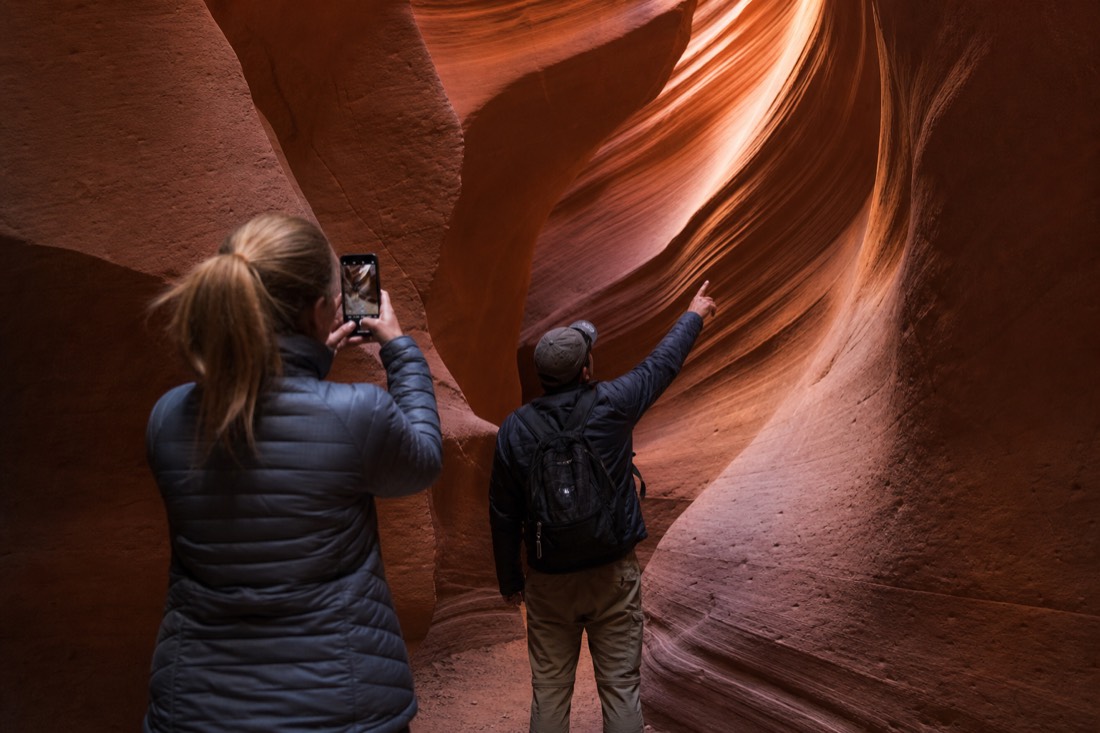
That quote comes from SARA_M, reviewing the Lower Antelope walk on Viator in May 2026, and it is the pattern, not the exception. The guides walk these corridors daily. They know the exact spot where a wall lines up into the shape everyone recognizes, which crevice glows at which hour, and where to stand so the person behind you is not in your frame. Recent reviews on both platforms repeat the same three services: photo-spot spotting, guides shooting portraits on guests' own phones, and canyon knowledge shared along the way.
My professional take on why this works: a guide who covers the same mile every day accumulates the kind of light knowledge a visiting photographer would need a week to build. You are not paying for access alone. You are borrowing several thousand walks' worth of pattern recognition, free with admission.
When is the light best for phone photos?
Midday, full stop. The famous vertical beams appear only in Upper Antelope, only from late March through mid-October, and only around the middle of the day, with the best window roughly 11am to 1pm. Outside beam season the canyon still glows, but from mid-October to mid-March no beams appear at all.
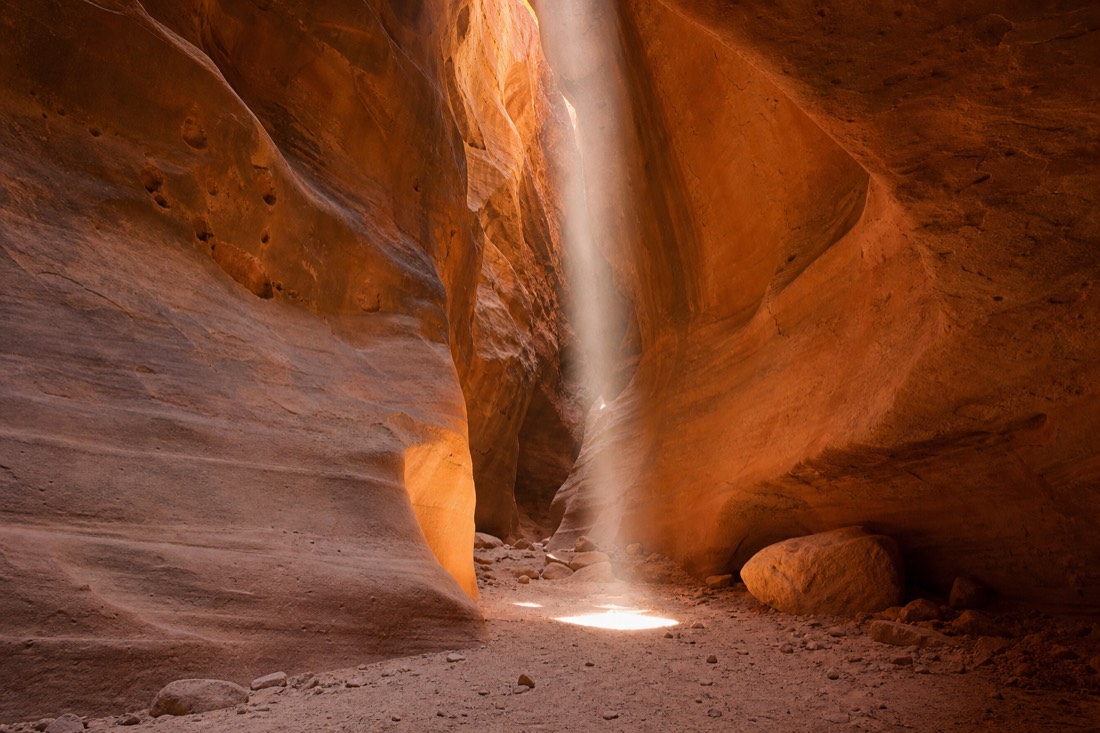
Phones make the timing question simpler, not harder, because handheld shooting rewards the brightest interior light the canyon offers. Here is the calendar in one place.
| Period | Beam status | Phone-shooting reality |
|---|---|---|
| Late March to mid-October | Beams possible in Upper, midday | Peak window roughly 11am to 1pm, book these slots early |
| Mid-October to mid-March | No reliable winter beam expectation | Softer glow, easier bookings, slower shutter moments |
| Any cloudy day | No beams regardless of season | Even, moody color, still worth shooting |
| Midday year-round | Brightest interior light | The most forgiving handheld conditions |
Two honesty notes that operators will give you and marketing will not. Beams are never guaranteed, since one cloud at the wrong moment cancels the show. And the beam-window slots are the ones that sell out months ahead in summer, a crunch I detail in the light beams post.
Which canyon shoots best on a phone: Upper, Lower, or X?
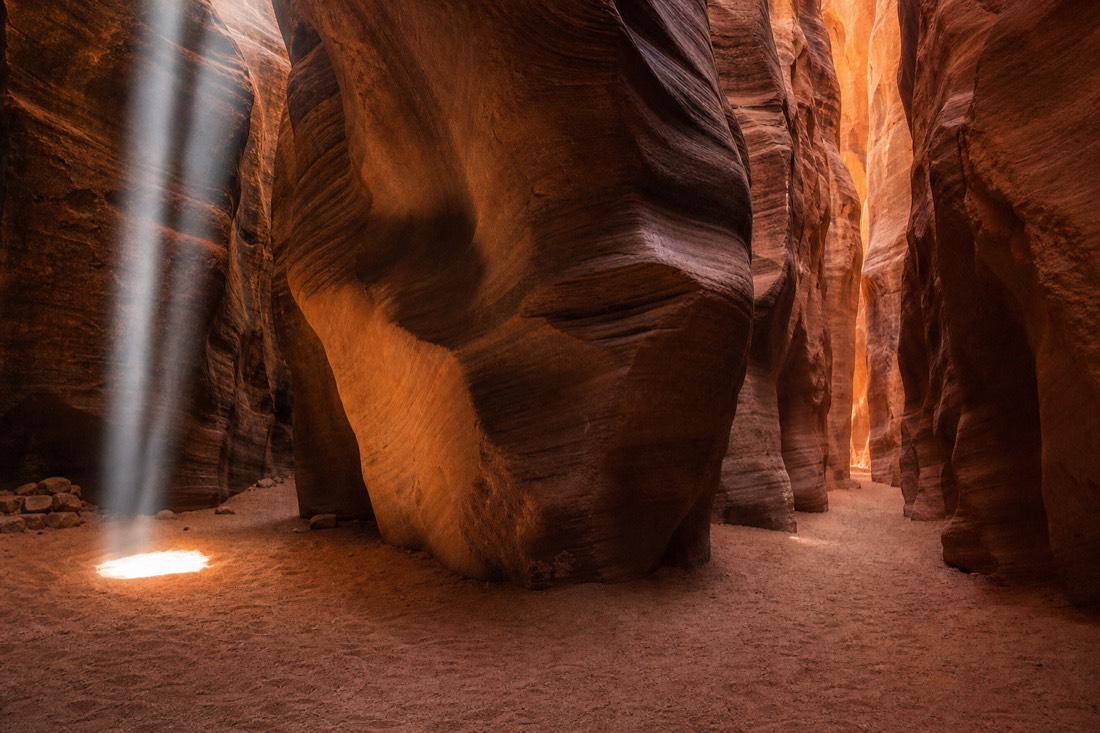
Upper wins for the beam shot, Lower for sculpted close-range walls and ladder drama, and Canyon X for uncrowded frames and unhurried composing. Since crowd pressure is the real limit on phone photography, quiet Canyon X punches above its fame, but the beam itself lives in Upper alone.
The trade-offs, laid out honestly.
| Canyon | The phone shot it is best at | The catch |
|---|---|---|
| Upper Antelope | The vertical beam on the canyon floor | Groups of 10 to 15 launching about every 8 minutes; midday July slots sell out months out |
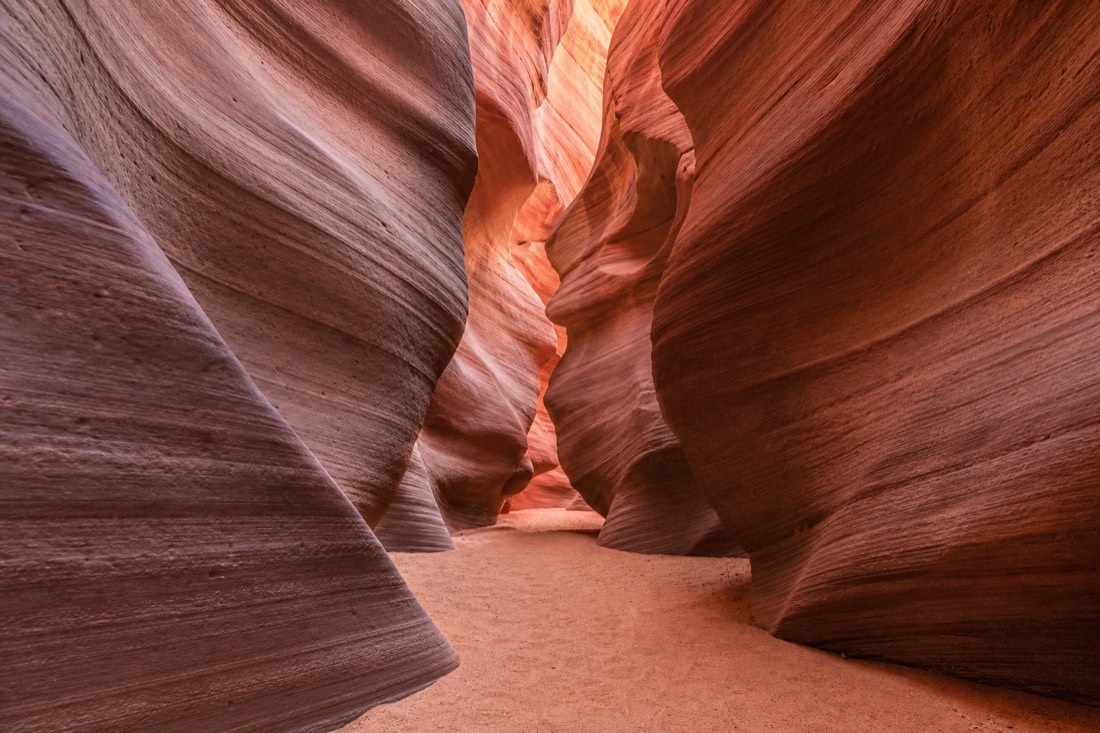
| Lower Antelope | Wave-carved walls, stairways descending into glow | Deeper slot entered by ladders, steady traffic in season |
| Canyon X | Clean, people-free compositions at your own pace | No beam icon shot; visitors call it about 90 percent of Lower with a fraction of the crowd |
If the beam is your one non-negotiable frame, there is only one answer. Book the midday Upper Antelope walk in season and check live availability and prices on Viator, where the AACT-run walk holds a 4.7 rating across 2,069 reviews. If your ideal shot is the canyon without humanity in it, X is the honest pick.
What phone habits actually improve the shots?
Shoot up and shoot low, wipe the lens constantly, use exposure lock on the bright wall rather than the shadows, and take bursts while walking pauses. This is my guide judgment on technique, not canyon law, but it maps to how the light and the sand actually behave in a slot.
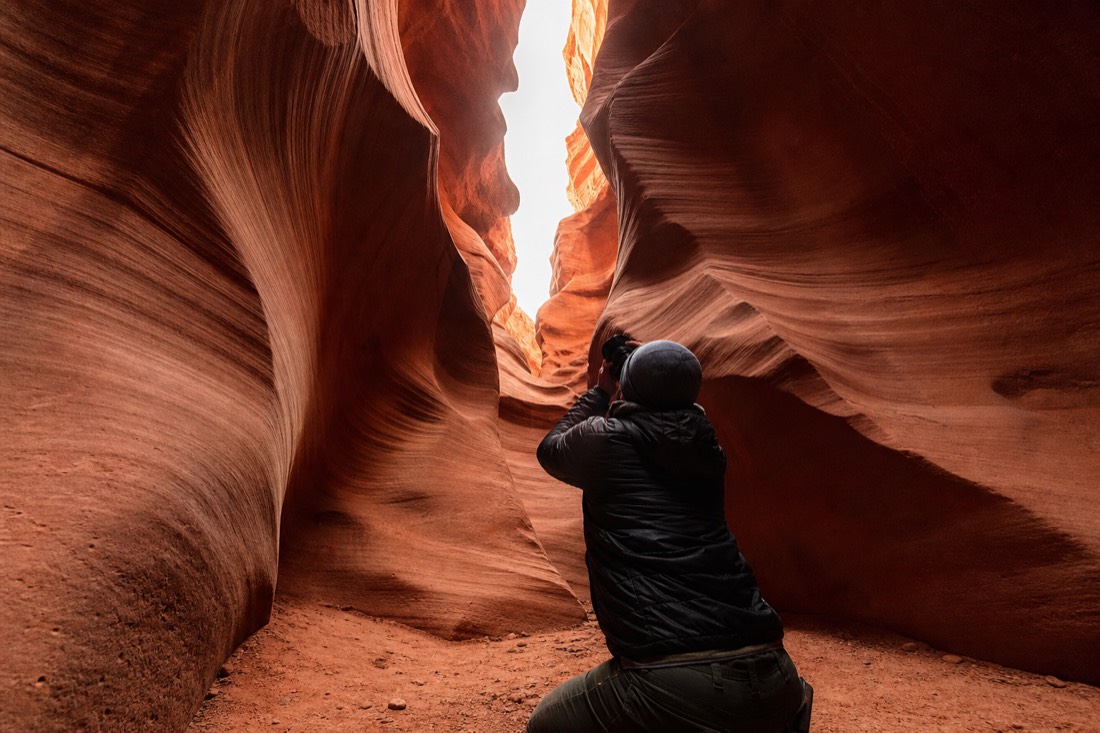
None of what follows is a sourced rule, so take it as one guide's advice. The canyon's best angles run vertical: the glow gradient from dark floor to burning rim reads strongest when you tilt the phone up and put the sky slit in frame, or drop near the floor and let the walls tower. Tap-and-hold to lock exposure on a bright wall section, because letting the phone average the scene flattens the exact contrast you came for.
And the sand: it falls, fine as flour, off walls being carved in real time. A lens wiped every few minutes outshoots any setting you could change. Keep the phone zipped away between stops, a habit the packing post treats as gospel for good reason.
What are the respectful-shooting rules?
You are photographing a sacred place on Navajo land as a guest. Stay with your guide, no climbing or wandering off route, respect requests not to photograph people, and leave the drone at home, since drones are prohibited across the Navajo Nation. The photograph is a privilege the community extends, not a right the ticket buys.
This last section matters more to me than the rest of the post. These canyons hold spiritual weight for the people who own them, and the rules published by Navajo Nation Parks and Recreation exist to protect that, not to inconvenience photographers. Arizona's own guide to visiting the canyon respectfully makes the same point from the visitor's side. Get your shot, absolutely. Then lower the phone for one full minute and look at the place with nothing between you and it. Every guide I know will tell you that minute is the one you will remember.
Your next booking step
Lower Antelope with a Navajo guide
Have a travel date in mind? A timed walk among Lower’s sculpted walls, with entry and the Navajo permit included. Check the date before arranging the rest of this part of your trip.
General starting point — confirm the exact party and date
Select a date to load the Viator schedule. Availability and final price are confirmed on Viator.
Check dates for Lower Antelope with a Navajo guide
Ken’s Tours, Lower entrance; arrive 30 minutes early. Return to the same site. Steel stairs and narrow passages; no bags or tripods. Not recommended during pregnancy or with spinal/cardiovascular conditions. Customer cancellation: full refund at least 24 hours before departure; reconfirm at checkout.
Compare routes, adjust your plan & budget
Tripods are banned and photo tours are gone, so everyone shoots Antelope Canyon handheld now. When the light peaks, which canyon suits a phone, what guides do to help, and the respectful-shooting rules. These are different experiences, not interchangeable admission tickets. All listed guiding is in English.
A timed walk among Lower’s sculpted walls, with entry and the Navajo permit included. 60 minutes; English; from Page. Ken’s Tours, Lower entrance; arrive 30 minutes early. Return to the same site. Steel stairs and narrow passages; no bags or tripods. Not recommended during pregnancy or with spinal/cardiovascular conditions. Customer cancellation: full refund at least 24 hours before departure; reconfirm at checkout.
Upper’s beam corridor with a Navajo guide; fees and taxes included. 80 minutes; English; from Page. Adventurous Antelope Canyon Tours, Highway 98; arrive 30 minutes early. Return to the same base. Ages 8+; moderate fitness. Sandy walking and the outdoor stair/hill exit; no guaranteed beams. Not recommended during pregnancy or with spinal/cardiovascular conditions. Customer cancellation: full refund at least 24 hours before departure; reconfirm at checkout.
Two Canyon X sections on Taadidiin’s guided hiking route. Choose the hiking option. 90 minutes; English; from Page. Taadidiin Tours, Highway 98; arrive 30 minutes early, using Arizona/Phoenix time. Return to the same site. Steep access trail. Permit is listed as included but the API’s old fee amount conflicts with current operator information; confirm the final total. Guide service fee extra. No tripod on hiking option. Nonrefundable for customer cancellation on Viator; read the exact weather-cancellation terms.
Affiliate links: we may earn a commission at no extra cost to you. Schedule dates are not confirmed seats.