Chasing the Light Beam in Upper Antelope Canyon
When the famous beams actually appear, why midday tours vanish months ahead, what a beamless day still delivers, and how to shoot it all without a tripod.
 By Daniel Begay, Navajo guide & Southwest canyon specialist
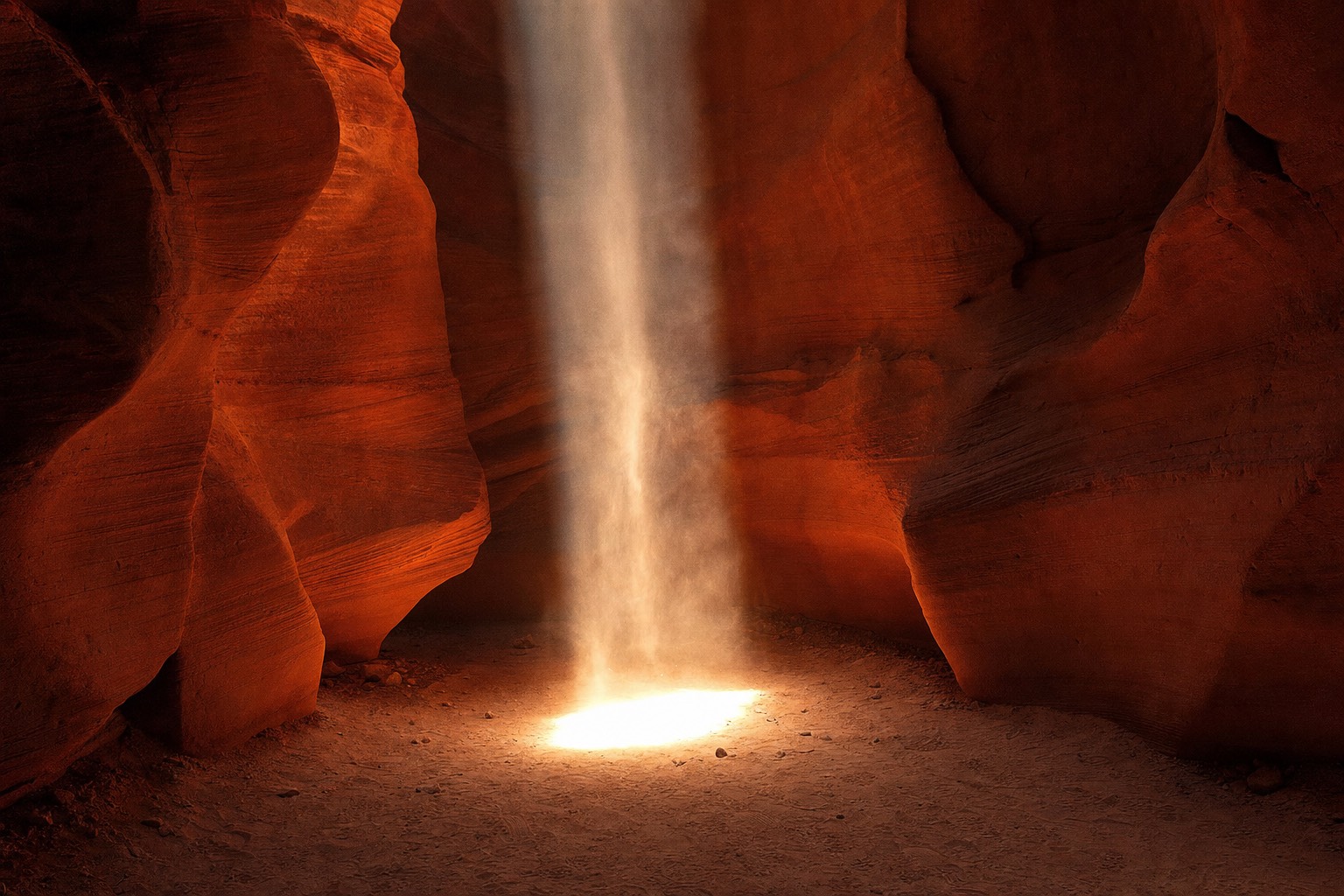
Light beams are not magic, they are geometry. I have spent my working life watching how sun moves across Navajo sandstone in Monument Valley, and the same physics runs Upper Antelope Canyon: a slot with a narrow ceiling opening, a sun high enough to drop straight through it, and a few short hours when the two line up. Everything about planning a beam trip flows from that one fact.
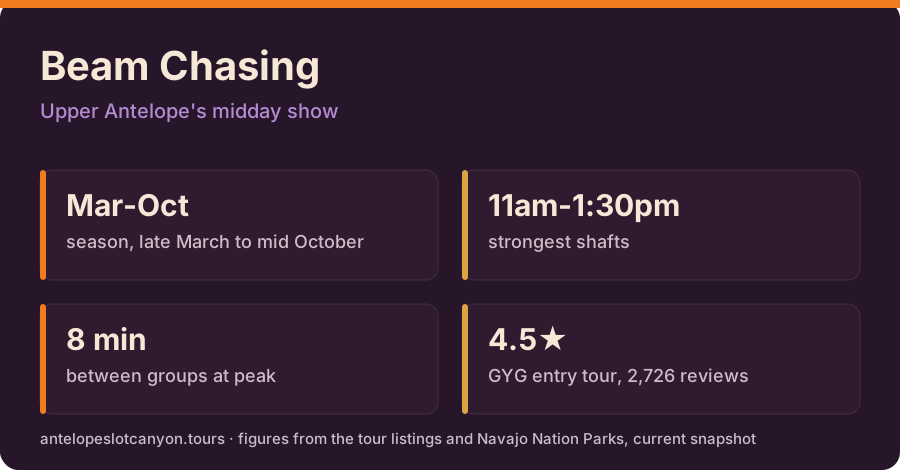
Quick take: beams appear from roughly late March to mid-October, strongest in the midday window around 11am to 1:30pm, and never on a heavily clouded day. Midday summer tours sell out months ahead. If you miss the beam, reviews say the canyon still earns its reputation. Book early, aim for midday, and hold your plans loosely.
When do the light beams actually appear in Upper Antelope Canyon?
Beam season runs from late March or early April through early to mid-October, with the strongest shafts in a midday window of roughly 11am to 1:30pm. Outside those months the sun sits too low to reach the canyon floor, and no operator can conjure a beam in November.
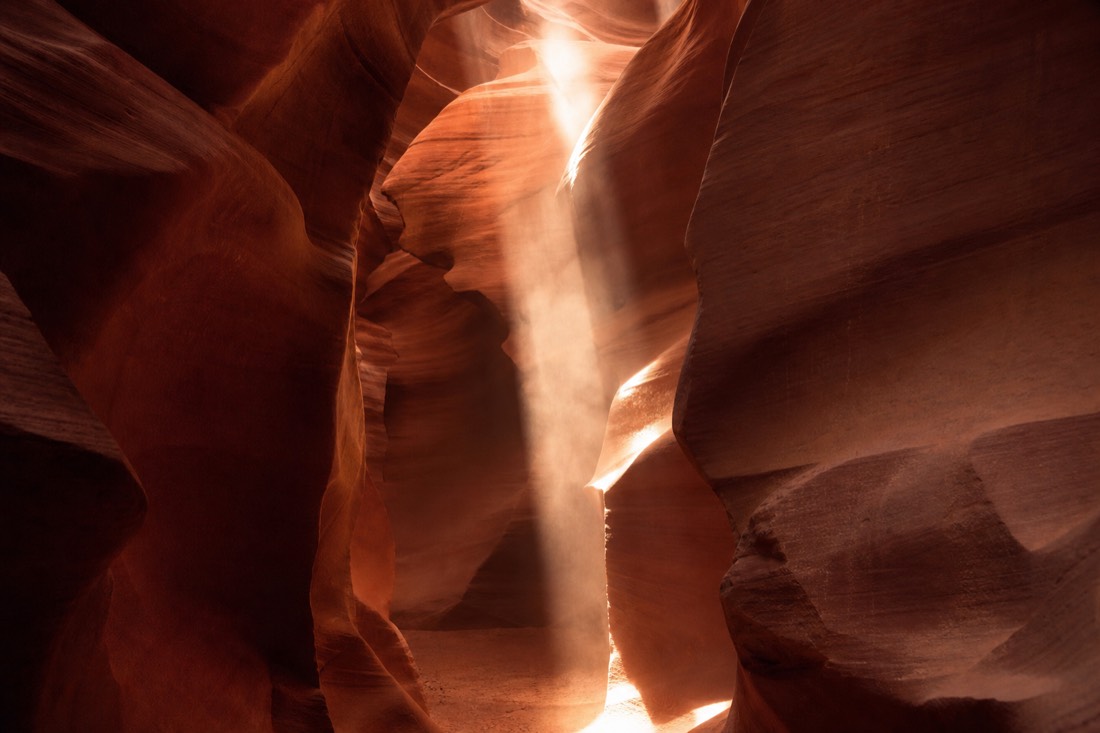
Upper Antelope is the beam canyon because of its shape. Unlike Lower's V, Upper is an A-shaped slot: wide and flat at the floor, pinched at the rim. That narrow ceiling slit acts like a projector gate. When the sun crosses high overhead, a column of light drops all the way to the sand. When the sun rides low, in winter or at 4pm, the light hits the upper walls and dies there.
Here is the calendar the way I would sketch it for a guest:
| Months | Beam odds | Notes |
|---|---|---|
| Late March to May | Good, building | Beams strengthen as the sun climbs |
| June to August | Peak | Strongest midday shafts, biggest crowds, monsoon clouds possible |
| September to mid-October | Good, fading | Season closes as the sun drops |
| Mid-October to mid-March | None | Beautiful low light, no vertical beams |
The overlap most people miss: peak beam season is also monsoon season, mid-June through September. A storm cell forty miles away can cancel your slot for flash-flood safety, and clouds alone can blank the beam even when tours run. Navajo Nation Parks & Recreation rules keep every section guided-only, so there is no sneaking back later for a second chance. My monsoon coping strategy lives in the backup plan post.
Why do midday beam tours sell out months in advance?
Because the beam window is narrow and everyone knows it. Recent forum reports say July midday departures sell out months ahead, with morning slots the last to go. Groups of about 10 to 15 leave roughly every eight minutes at peak, and the midday waves still fill first.
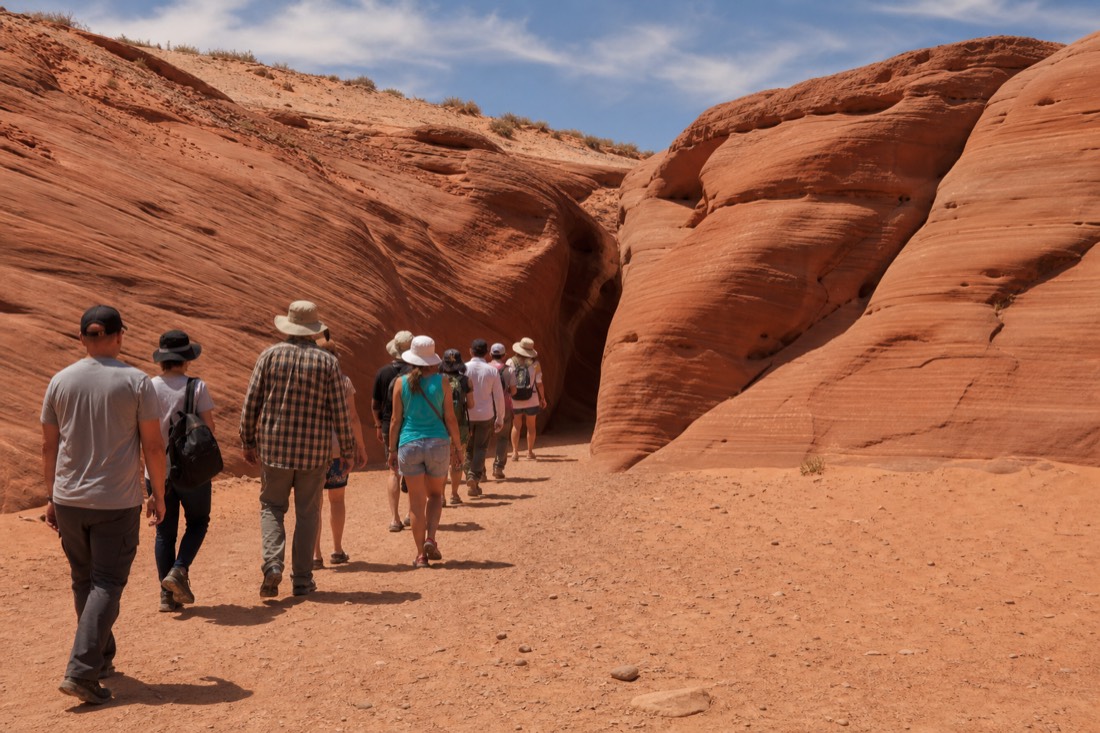
Run the numbers and the scarcity makes sense. The beam performs for about two and a half hours a day, a tour lasts 75 to 160 minutes depending on the product, and group size is capped. Demand for a specific two-hour window across a five-month season collapses onto a small pile of tickets. Visitors on Tripadvisor's forums describe watching mid-July midday dates evaporate while morning times lingered.
This is where the booking terms matter more than usual. The Viator alternative from Adventurous Antelope Canyon Tours cancels up to 24 hours out. I compare the two later in this post. Cancellation depends on the exact ticket: the checked AACT Upper and Lower Viator listings allow a full refund when canceled at least 24 hours ahead. Canyon X on Viator is nonrefundable for customer cancellations, while the checked GetYourGuide Canyon X listing allows cancellation at least four days ahead. Reconfirm the chosen option at checkout.
What happens if there is no beam on your tour?
You still get the canyon, and reviews say that is plenty. Beams need direct sun, so clouds or a winter date mean sculpted walls and glowing reflected color instead of a spotlight. Visitors on beamless days consistently rate the experience five stars anyway, often because of the guide.
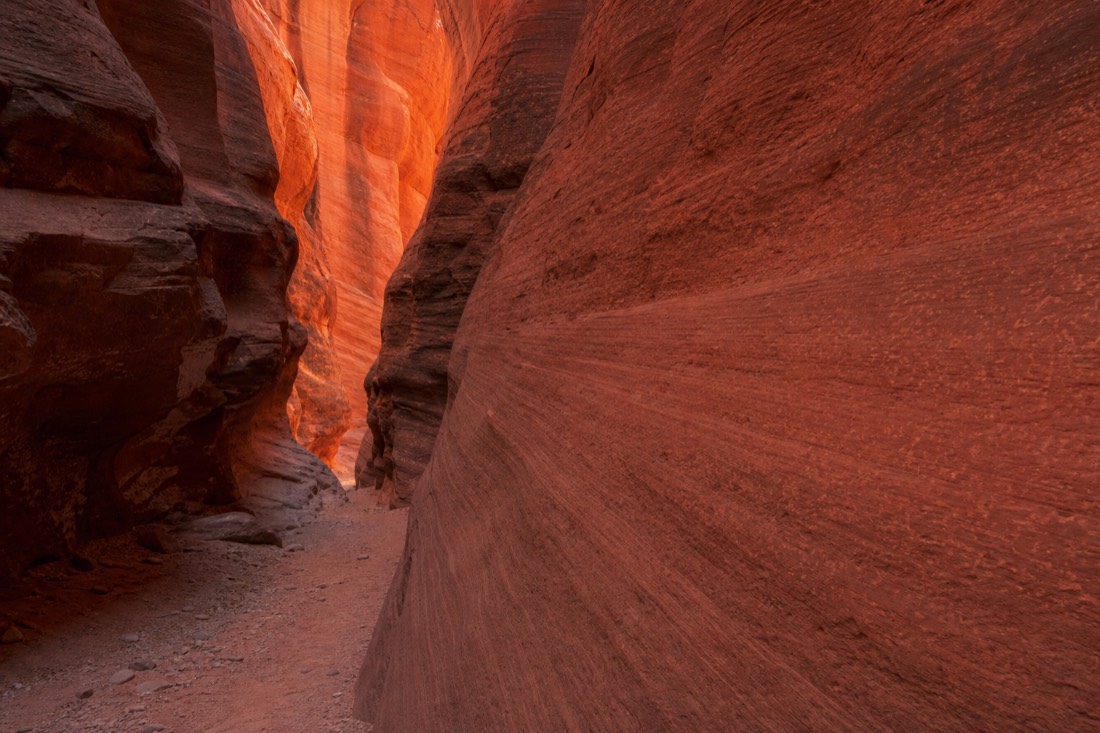
I want to push back on the idea that a beamless visit is a failed visit. A Viator reviewer who went in February 2026, deep in the no-beam months, wrote simply: "It was awesome, awesome tour guide, everything was so beautiful. Highly recommend." Another Viator visitor that May described a morning tour where "Carson, our tour guide was friendly and took great photos of us and for us!! He shared stories of his family heritage especially his grandparents."
That second review points at something I believe strongly as a Navajo guide. The beam is a photograph. The canyon, and the person walking you through their family's land telling you what it means, is the experience. Reflected light in Upper Antelope turns the walls orange, red, and purple all day long in every season. The beam is the encore, not the show.
How do you photograph the beam without a tripod?
Handheld or phone only. Standard sightseeing walks exclude tripods, monopods and selfie sticks; Canyon X’s photography option permits a tripod, and the dedicated photography tours that once allowed them no longer exist on any platform. Midday light is strong enough that modern phones handle the beam well, which recent visitor reports confirm.
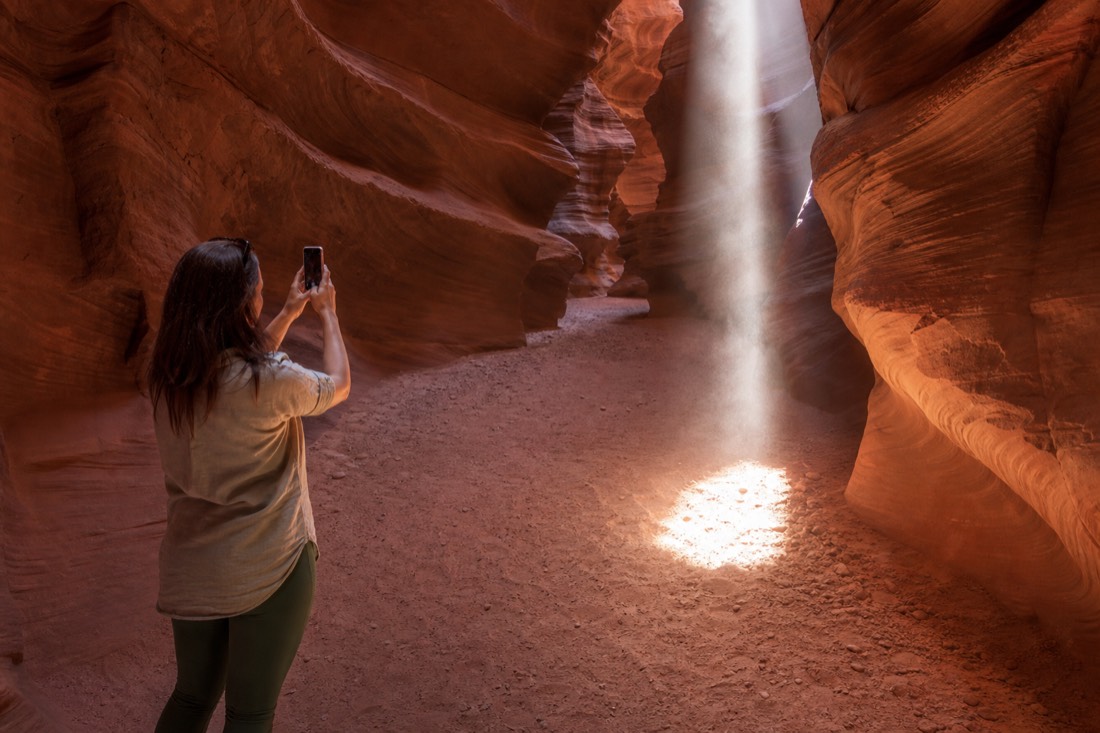
The current rulebook, condensed:
| Rule | Status |
|---|---|
| Tripods, monopods, selfie sticks | Banned since 2019 |
| Dedicated photo tours with extended time | No longer offered anywhere |
| Handheld cameras and phones | Allowed |
| Drones | Prohibited across the Navajo Nation |
I checked every major platform while researching this site and found zero bookable photography-specific tours, which surprises people who read older blog posts. The 2021-era rule changes ended them. What replaced the tripod is the guide: reviews across all sections repeatedly describe guides taking phones and framing shots for guests at the proven angles. If you want technique for the small sensor in your pocket, I wrote up the approach in shooting the canyon on a phone, and the broader timing strategy sits in the light beams guide.
Which Upper Antelope tour should you book?
Book by cancellation tolerance. Viator's AACT tour holds a 4.7 from 2,069 reviews and cancels to 24 hours. Flexible plans favor Viator; locked plans can take either. Cancellation depends on the exact ticket: the checked AACT Upper and Lower Viator listings allow a full refund when canceled at least 24 hours ahead. Canyon X on Viator is nonrefundable for customer cancellations, while the checked GetYourGuide Canyon X listing allows cancellation at least four days ahead. Reconfirm the chosen option at checkout.

The side-by-side, from the listings themselves:
| Listing | Rating | Duration | Group | Cancellation |
|---|---|---|---|---|
| Viator, AACT | 4.7 (2,069 reviews) | About 1 h 20 min | Shared, max 30, meets at Hwy 98 milepost 302 | Up to 24 hours ahead |
My call: for beam season, when monsoon clouds can wreck a specific date, the 24-hour window is worth real money.
Is the beam worth planning a whole trip around?
Worth planning toward, not gambling on. Aim a midday Upper tour inside beam season and you stack the odds, but clouds answer to nobody. Build a trip that succeeds without the beam, treat the shaft of light as a bonus, and you cannot really lose.
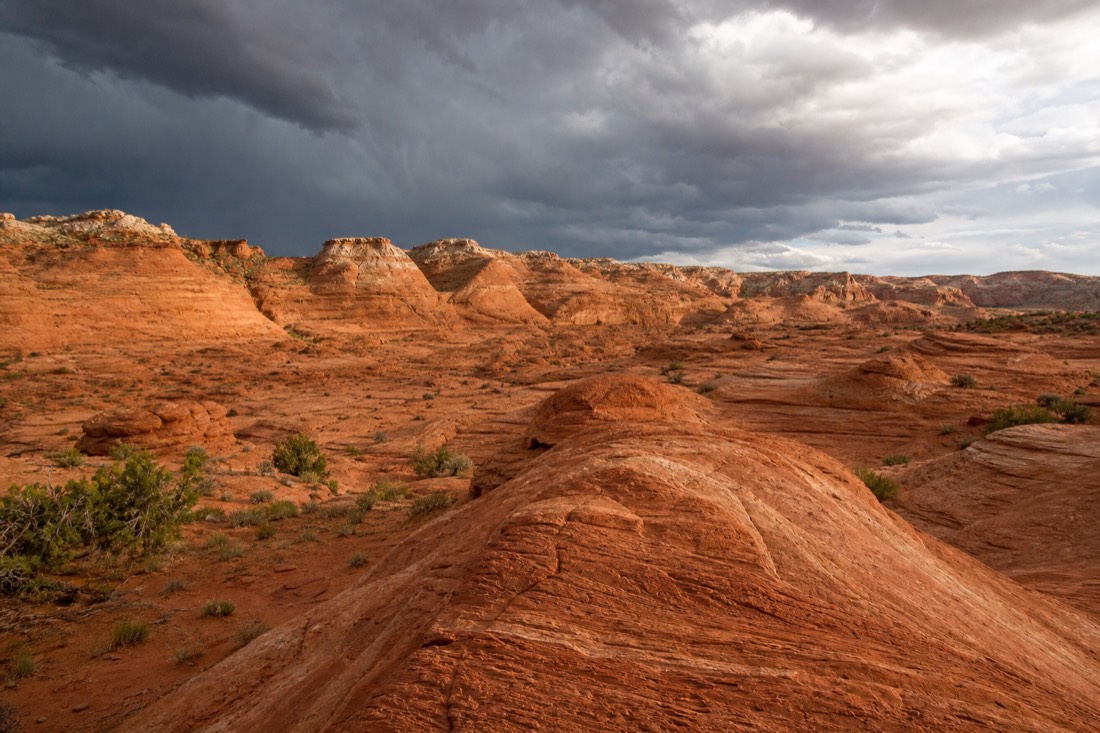
The longtime Upper operator, Antelope Canyon Navajo Tours, keeps running this section outside beam season, and the winter reviews stay warm. That tells you what the beam really is: the most photogenic stretch of a canyon that works in every season.
So chase the beam the way I tell guests to chase any desert light. Put yourself in the right slot at the right hour, then let the sky decide. Either way you walk out with a full camera roll.
Your next booking step
Upper Antelope with AACT
Have a travel date in mind? Upper’s beam corridor with a Navajo guide; fees and taxes included. Check the date before arranging the rest of this part of your trip.
General starting point — confirm the exact party and date
Select a date to load the Viator schedule. Availability and final price are confirmed on Viator.
Check dates for Upper Antelope with AACT
Adventurous Antelope Canyon Tours, Highway 98; arrive 30 minutes early. Return to the same base. Ages 8+; moderate fitness. Sandy walking and the outdoor stair/hill exit; no guaranteed beams. Not recommended during pregnancy or with spinal/cardiovascular conditions. Customer cancellation: full refund at least 24 hours before departure; reconfirm at checkout.
Compare routes, adjust your plan & budget
When the famous beams actually appear, why midday tours vanish months ahead, what a beamless day still delivers, and how to shoot it all without a tripod. These are different experiences, not interchangeable admission tickets. All listed guiding is in English.
Upper’s beam corridor with a Navajo guide; fees and taxes included. 80 minutes; English; from Page. Adventurous Antelope Canyon Tours, Highway 98; arrive 30 minutes early. Return to the same base. Ages 8+; moderate fitness. Sandy walking and the outdoor stair/hill exit; no guaranteed beams. Not recommended during pregnancy or with spinal/cardiovascular conditions. Customer cancellation: full refund at least 24 hours before departure; reconfirm at checkout.
A timed walk among Lower’s sculpted walls, with entry and the Navajo permit included. 60 minutes; English; from Page. Ken’s Tours, Lower entrance; arrive 30 minutes early. Return to the same site. Steel stairs and narrow passages; no bags or tripods. Not recommended during pregnancy or with spinal/cardiovascular conditions. Customer cancellation: full refund at least 24 hours before departure; reconfirm at checkout.
Two Canyon X sections on Taadidiin’s guided hiking route. Choose the hiking option. 90 minutes; English; from Page. Taadidiin Tours, Highway 98; arrive 30 minutes early, using Arizona/Phoenix time. Return to the same site. Steep access trail. Permit is listed as included but the API’s old fee amount conflicts with current operator information; confirm the final total. Guide service fee extra. No tripod on hiking option. Nonrefundable for customer cancellation on Viator; read the exact weather-cancellation terms.
Affiliate links: we may earn a commission at no extra cost to you. Schedule dates are not confirmed seats.