Is Antelope Canyon a Hike? The Honest Effort Level
Antelope Canyon is a guided walk, not a trail hike. What the stairs at Lower actually feel like, how flat Upper really is, where Canyon X gets steep, and which booking gives you a real workout.
 By Daniel Begay, Navajo guide & Southwest canyon specialist
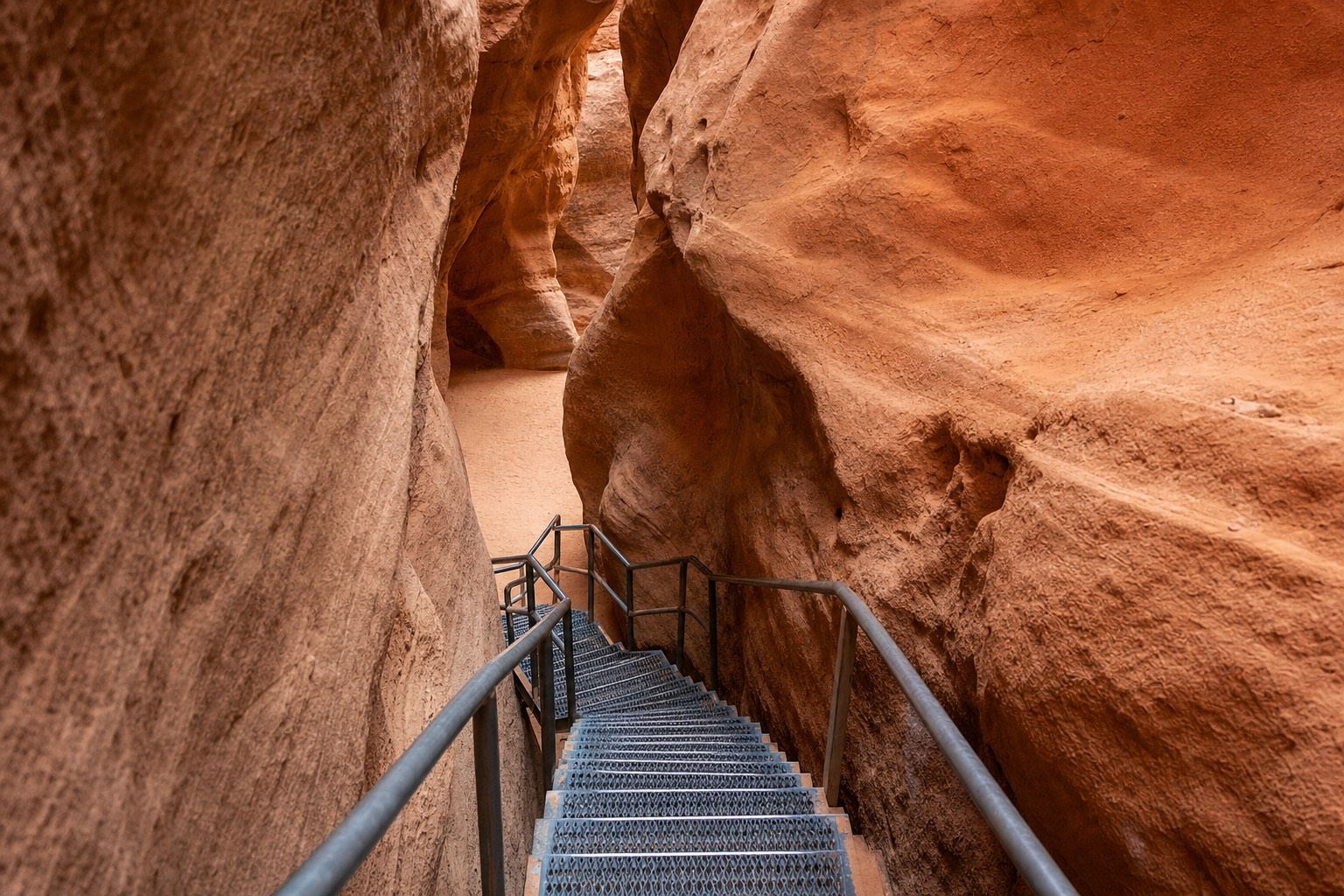
"Hike" is the word doing all the damage. Search traffic calls it the Antelope Canyon hike, some listings call it a hiking tour, and travelers show up with trekking poles for what is, honestly, a guided walk you could do in city sneakers. I guide people across Navajo land for a living, and managing expectations is half my job. So let me do that here, section by section, because the effort question has a different answer at every entrance, and one booking near Page really does earn the word hike.
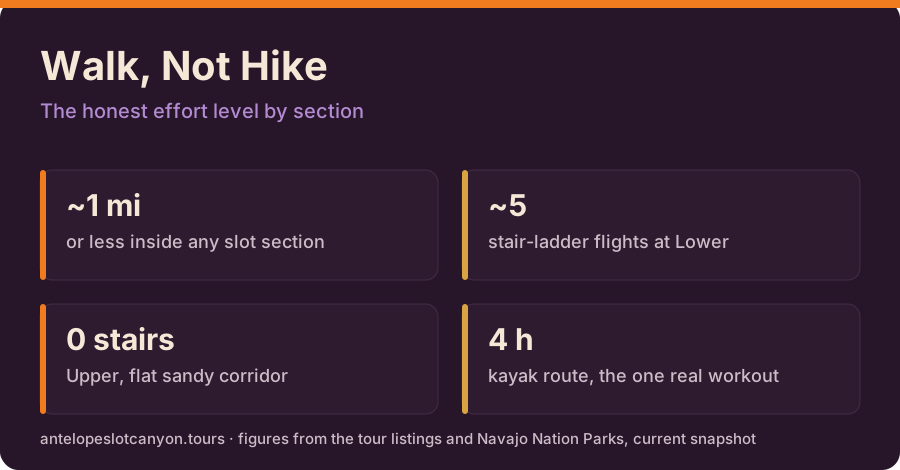
Quick take: no section of Antelope Canyon is a trail hike. Every visit is a guided walk of roughly a mile or less inside the canyon, at the group's pace. Lower adds about five flights of stairs and ladders. Upper has a sandy interior plus an outdoor hill-and-stair exit. Canyon X has one steep entry slope. If you want genuine exertion, the Lake Powell kayak route is the honest answer.
Is there an actual hiking trail at Antelope Canyon?
No. There is no trailhead, no route markers, and no self-guided access of any kind. Every section sits on Navajo Nation land where entry is guided-only through authorized operators. What you buy is a scheduled, escorted walk through a slot corridor, usually about an hour inside, moving at the pace your guide sets.
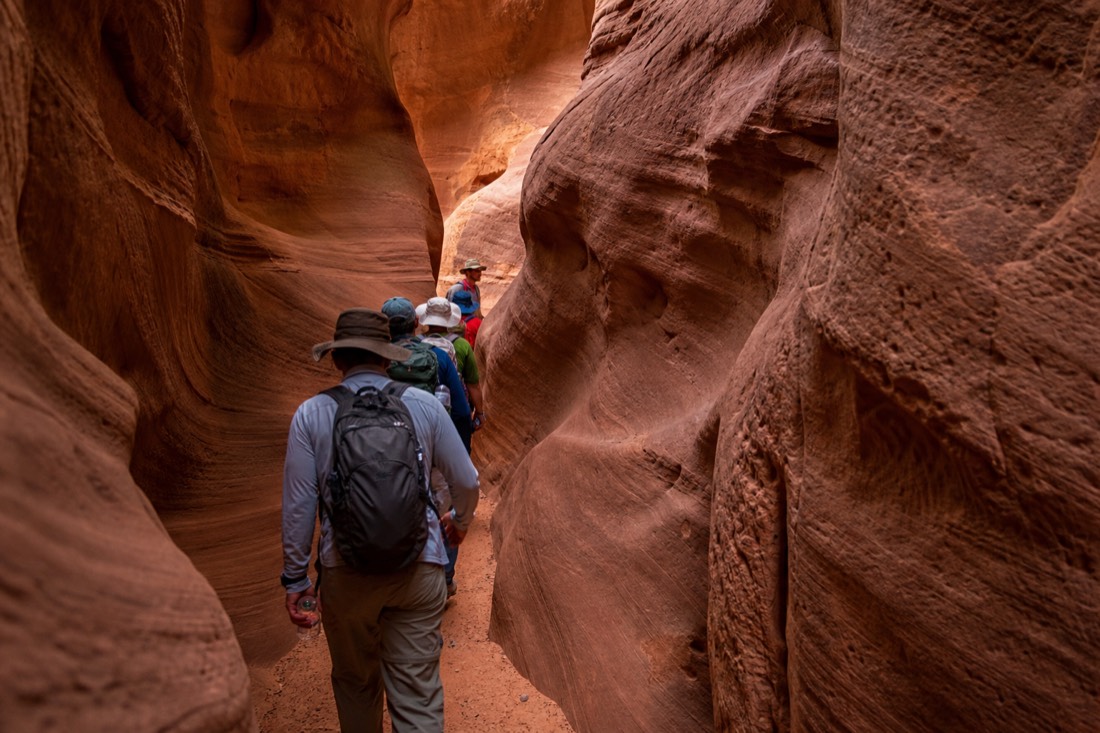
The gap between the word and the reality is worth spelling out, because it decides what you pack, who you bring, and whether you leave satisfied.
| Expectation if it were a hike | What a guided canyon walk actually is |
|---|---|
| Pick your own pace and turnaround | Group pace, fixed route, guide in charge |
| Miles of trail | Roughly a mile or less inside the slot |
| Solitude if you time it right | Scheduled groups moving in sequence |
| Trekking gear useful | Sneakers and water cover it |
| Free or cheap access | Tour ticket plus $15 Navajo Nation permit |
Visitor threads comparing the sections land on the same verdict again and again: these are easy walks, not hikes. That is not a knock. The walls, the light, and the guide's knowledge are the product. But if your group includes someone who measures a day by elevation gain, set that expectation now, before the booking, because there is no wandering in to find out.
How much climbing does Lower Antelope really involve?
Lower Antelope is the most physical slot section, and the work is vertical: about five flights of metal stairs and ladders drop you into the canyon, with more short ladders along the way. Between them, the corridor runs mostly flat. Recent reviews call it very manageable for anyone comfortable on a steep staircase.
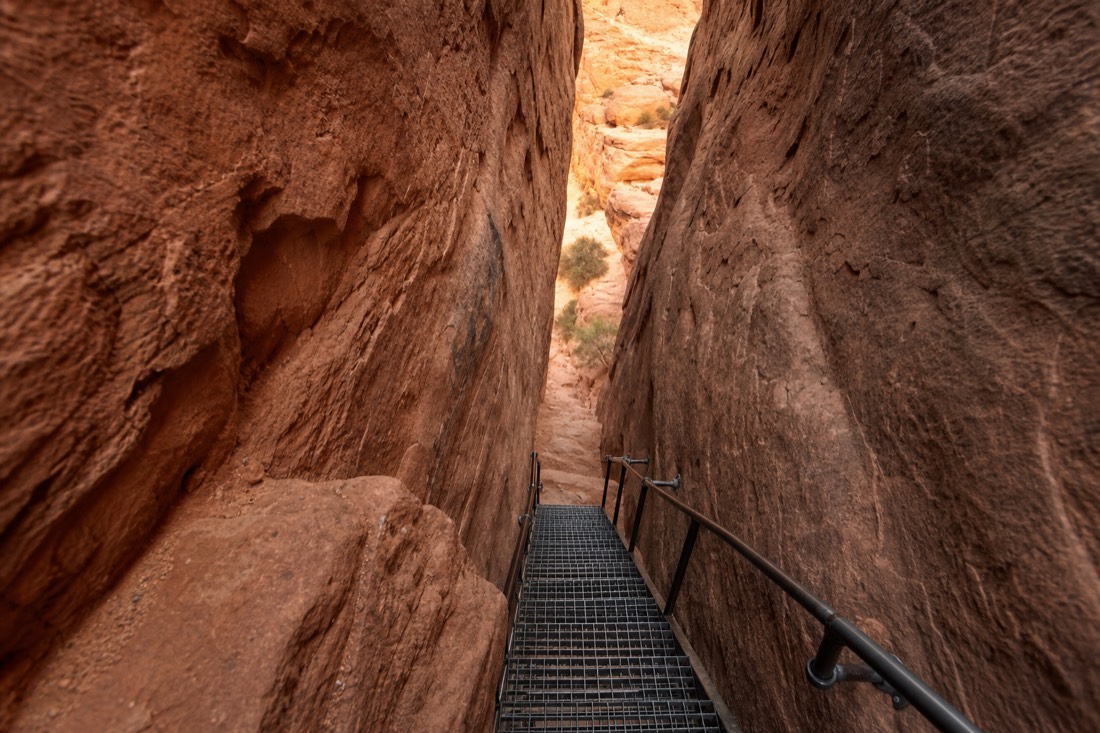
The stairs are the reason Lower carries a "hiking tour" label on some listings and the reason its minimum ages run stricter than Upper's. They are steep, sometimes single-file, and a little exposed in the way a fire escape is exposed. Ken's Tours, one of the two family operations running the section, has managed that descent for decades, and the hardware is solid and maintained.
What visitors consistently report is that dread outruns reality. The climbing comes in short bursts with flat walking between, the full visit runs around an hour, and children clear it daily. Knees and hips feel the descent more than lungs do. For the fuller picture of what the section feels like wall to wall, the Lower Antelope field report walks the whole route.
How do Upper and Canyon X compare on effort?
Upper Antelope is the easiest walk in the system: a sandy inner corridor followed by an outdoor hill-and-stair exit. Canyon X asks for one real effort, a steep slope down from the rim to the canyon floor and back up at the end. Inside, both are level strolls at group pace.
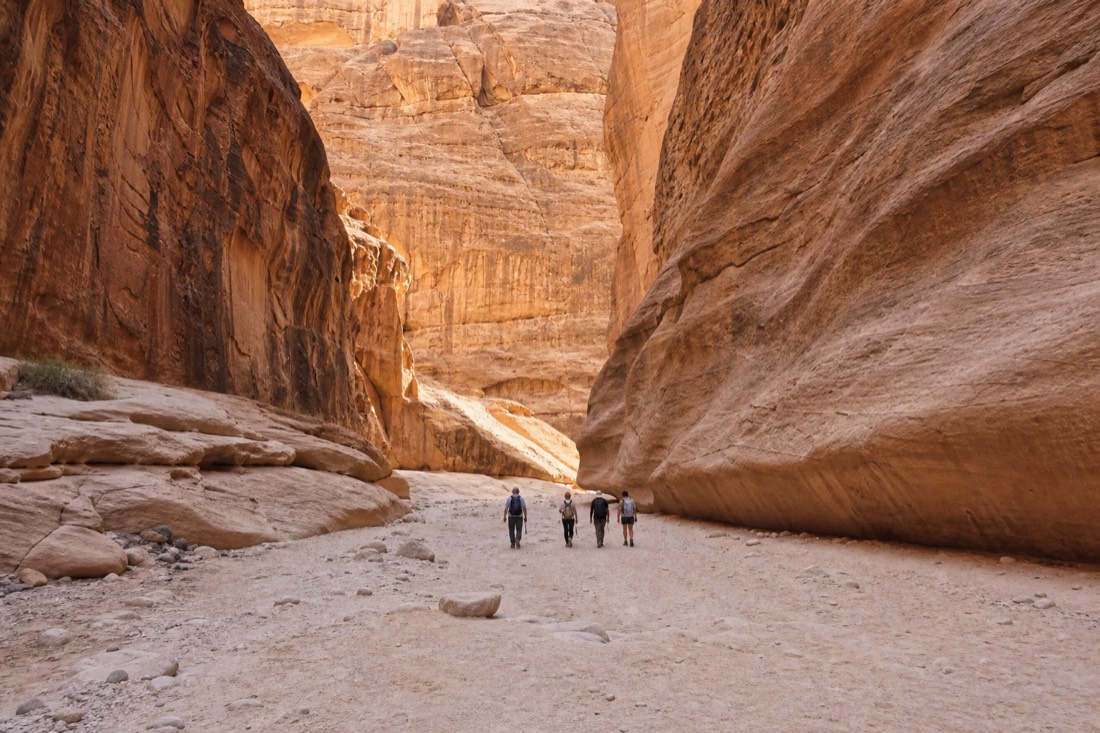
Here is the effort map across every booking we cover, kayak included for contrast.
| Booking | The physical work | Time on your feet | Who it suits |
|---|---|---|---|
| Upper Antelope walk | Flat sandy corridor, no climbing | About 75 to 160 minutes with transport | Lowest-mobility visitors, strollers of the walking kind |
| Lower Antelope walk | About five flights of stairs and ladders, then flat | Around an hour inside | Anyone fine on steep staircases |
| Canyon X walk | Steep entry slope down and back up | Around an hour | Visitors wanting quiet over convenience |
| Lake Powell kayak and hike | Four hours of paddling plus a walk | Half a day | People who want to earn the view |
Upper’s wider interior does not make the full route step-free: its outdoor exit has hills and stairs, and every visitor needs to meet the exact operator’s requirements. Canyon X trades that convenience for space: the slope at the entry is the price of a corridor with a fraction of the crowd, and visitors who make that trade rarely regret it.
Who actually finds these walks hard?
Three things cause nearly every struggle: summer heat on the exposed approaches, the stairs and ladders at Lower for anyone with knee or balance issues, and deep soft sand underfoot everywhere. Minimum ages typically run about 5 to 8 depending on section and operator, with Lower's ladders behind the stricter limits.
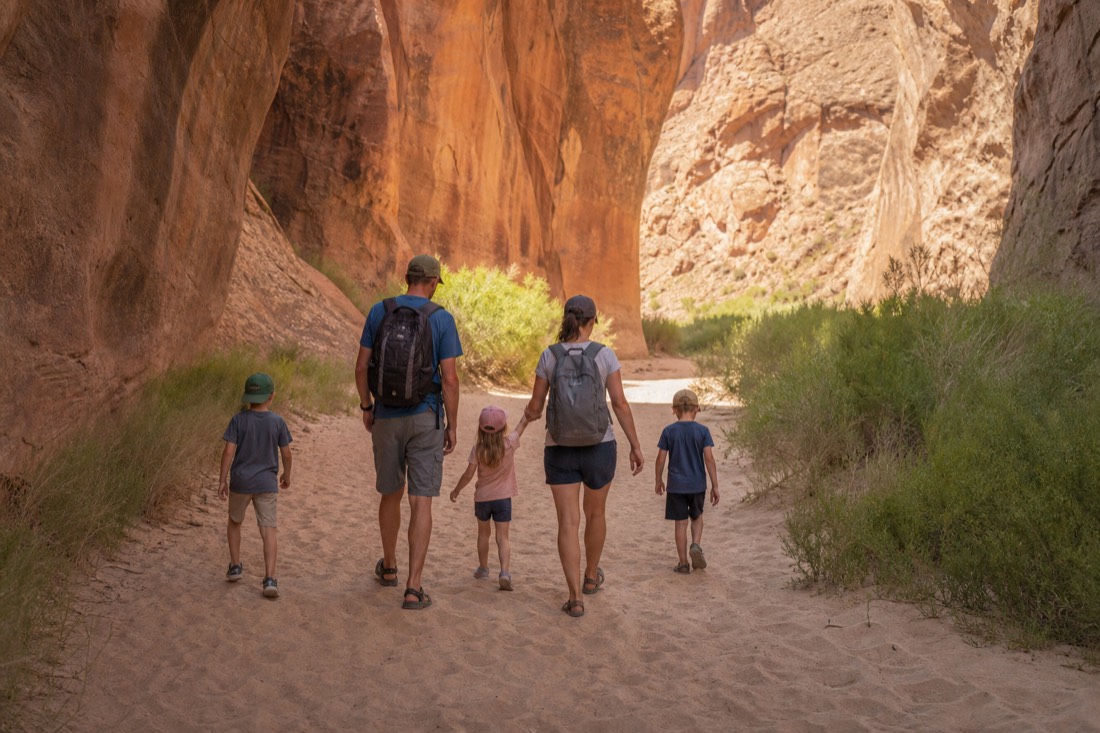
Heat is the sneaky one. The canyon interior stays shaded, but the walk from parking to entrance is open desert, and a July midday slot means crossing it at the worst hour. Water and a hat solve most of it. The sand is the surprise nobody warns people about: it is fine, deep, and constant, so every step costs a little more than pavement, and it swallows flip-flops whole.
The stairs question deserves a straight answer. If steep staircases or step-ladders are genuinely difficult for you, book Upper, full stop, since it delivers the same wall-and-light show with zero climbing. Parents planning around little legs and nap windows should also weigh section choice carefully; that decision has its own logic when kids are involved, starting with those minimum-age rules.
What should you wear and bring for the walk?
Closed shoes with grip, water, a brimmed hat, and sunglasses cover every section. Skip the big backpack, since large bags are impractical in the narrows, and standard sightseeing walks exclude tripods, monopods and selfie sticks; Canyon X’s photography option permits a tripod. Phones handle the photography. Dress for the season, not for a summit.
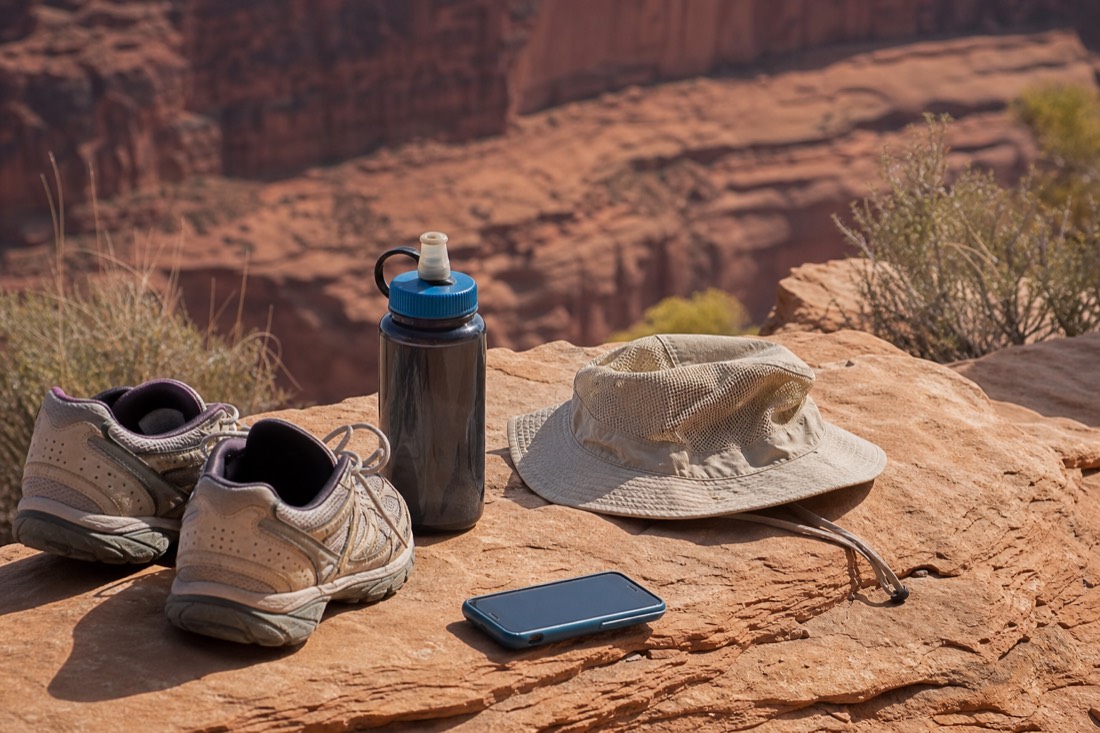
| Item | Verdict | Why |
|---|---|---|
| Closed sneakers | Bring | Deep sand plus metal stairs |
| Water bottle | Bring | Exposed approach, desert air |
| Brimmed hat and sunglasses | Bring | Sun and falling sand from the rims |
| Tripod, monopod, selfie stick | Banned | Prohibited across the canyon since 2019 |
| Large backpack | Leave it | Awkward in narrow passages |
| Hiking boots and poles | Unnecessary | It is a walk, not a trail |
That is the short version; the what to wear and bring post runs the full seasonal kit, including the winter-layers and monsoon-window details. The one rule I give every guest holds here too: whatever you carry, you carry through sand, so pack like you mean it.
What if you actually want a workout?
Book the water route. The Lake Powell kayak and hike is a four-hour trip that paddles you toward the canyon's lakeside arm and then puts you on foot, and it is real exercise in a way no slot walk pretends to be. It holds a 4.7 from 48 Viator reviews, with free cancellation.
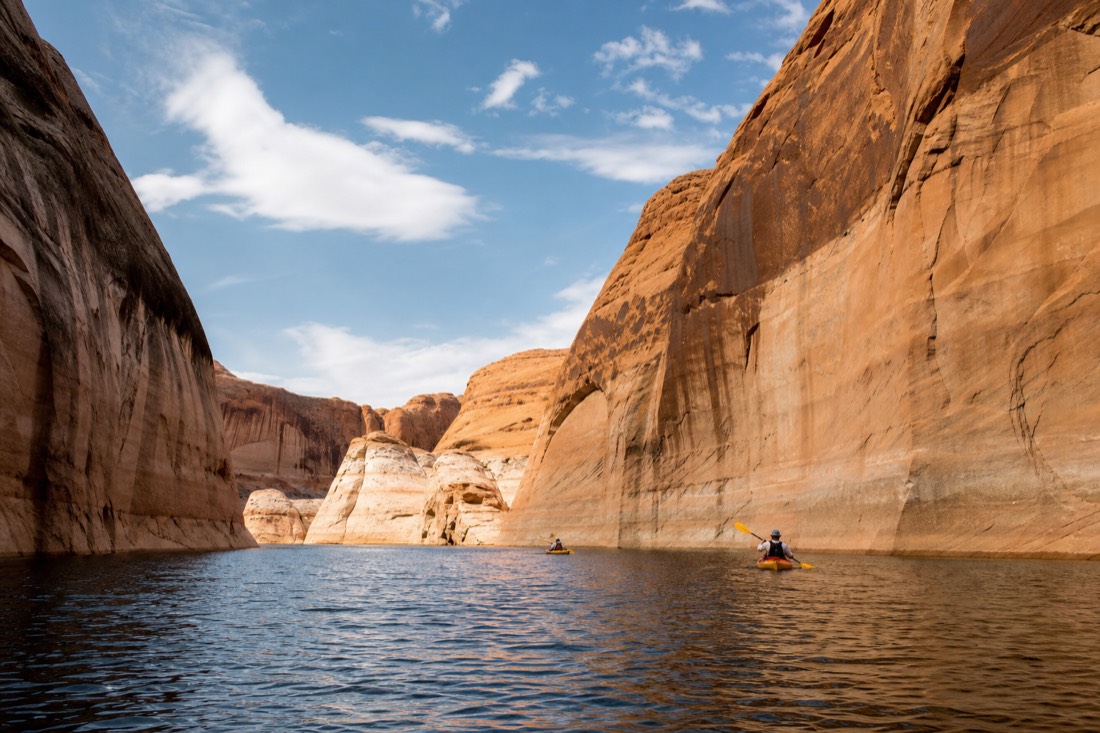
One honesty note before you book it: this is a different product in kind, not just in sweat. It runs on the Glen Canyon National Recreation Area side, on NPS-managed water, and it is not a Navajo-guided slot walk. You trade the carved corridors and the tribal-park guiding culture for open water, quiet, and arms that know they did something. With Lake Powell sitting far below full pool, the exposed shoreline has its own strange drama right now.
Plenty of visitors do both: a slot walk for the walls, the paddle for the work. If that mix sounds right, start with the kayak route details and check live availability and prices on Viator, then slot a guided walk around it. The kayaking field notes cover what the paddle day actually feels like hour by hour.
Call it what it is, then enjoy it for what it is. A guided walk through flood-carved stone with someone whose family knows the ground is not a lesser experience than a hike. It is a different one, and on the right morning, it is the better one.
Your next booking step
Lower Antelope with a Navajo guide
Have a travel date in mind? A timed walk among Lower’s sculpted walls, with entry and the Navajo permit included. Check the date before arranging the rest of this part of your trip.
General starting point — confirm the exact party and date
Select a date to load the Viator schedule. Availability and final price are confirmed on Viator.
Check dates for Lower Antelope with a Navajo guide
Ken’s Tours, Lower entrance; arrive 30 minutes early. Return to the same site. Steel stairs and narrow passages; no bags or tripods. Not recommended during pregnancy or with spinal/cardiovascular conditions. Customer cancellation: full refund at least 24 hours before departure; reconfirm at checkout.
Compare routes, adjust your plan & budget
Antelope Canyon is a guided walk, not a trail hike. What the stairs at Lower actually feel like, how flat Upper really is, where Canyon X gets steep, and which booking gives you a real workout. These are different experiences, not interchangeable admission tickets. All listed guiding is in English.
A timed walk among Lower’s sculpted walls, with entry and the Navajo permit included. 60 minutes; English; from Page. Ken’s Tours, Lower entrance; arrive 30 minutes early. Return to the same site. Steel stairs and narrow passages; no bags or tripods. Not recommended during pregnancy or with spinal/cardiovascular conditions. Customer cancellation: full refund at least 24 hours before departure; reconfirm at checkout.
Upper’s beam corridor with a Navajo guide; fees and taxes included. 80 minutes; English; from Page. Adventurous Antelope Canyon Tours, Highway 98; arrive 30 minutes early. Return to the same base. Ages 8+; moderate fitness. Sandy walking and the outdoor stair/hill exit; no guaranteed beams. Not recommended during pregnancy or with spinal/cardiovascular conditions. Customer cancellation: full refund at least 24 hours before departure; reconfirm at checkout.
Four hours combining Lake Powell paddling and a walk into Water Antelope Canyon. Kayak, paddle, life jacket and dry bag supplied. 240 minutes; English; from Page. Use the launch location in your confirmation; arrive 30 minutes early. Return paddle to the launch. Choose the four-hour kayak-and-hike option. Ages 5+; bring water and food. National Park Pass and tips extra. Not Upper or Lower; not recommended during pregnancy or with spinal/cardiovascular conditions.
Affiliate links: we may earn a commission at no extra cost to you. Schedule dates are not confirmed seats.