How Antelope Canyon Reservations Actually Work
Fixed time slots, hard capacity, and listings that sell out months ahead: how booking a slot canyon walk near Page really works, which cancellation windows apply, and how the $15 Navajo permit fits in.
 By Daniel Begay, Navajo guide & Southwest canyon specialist
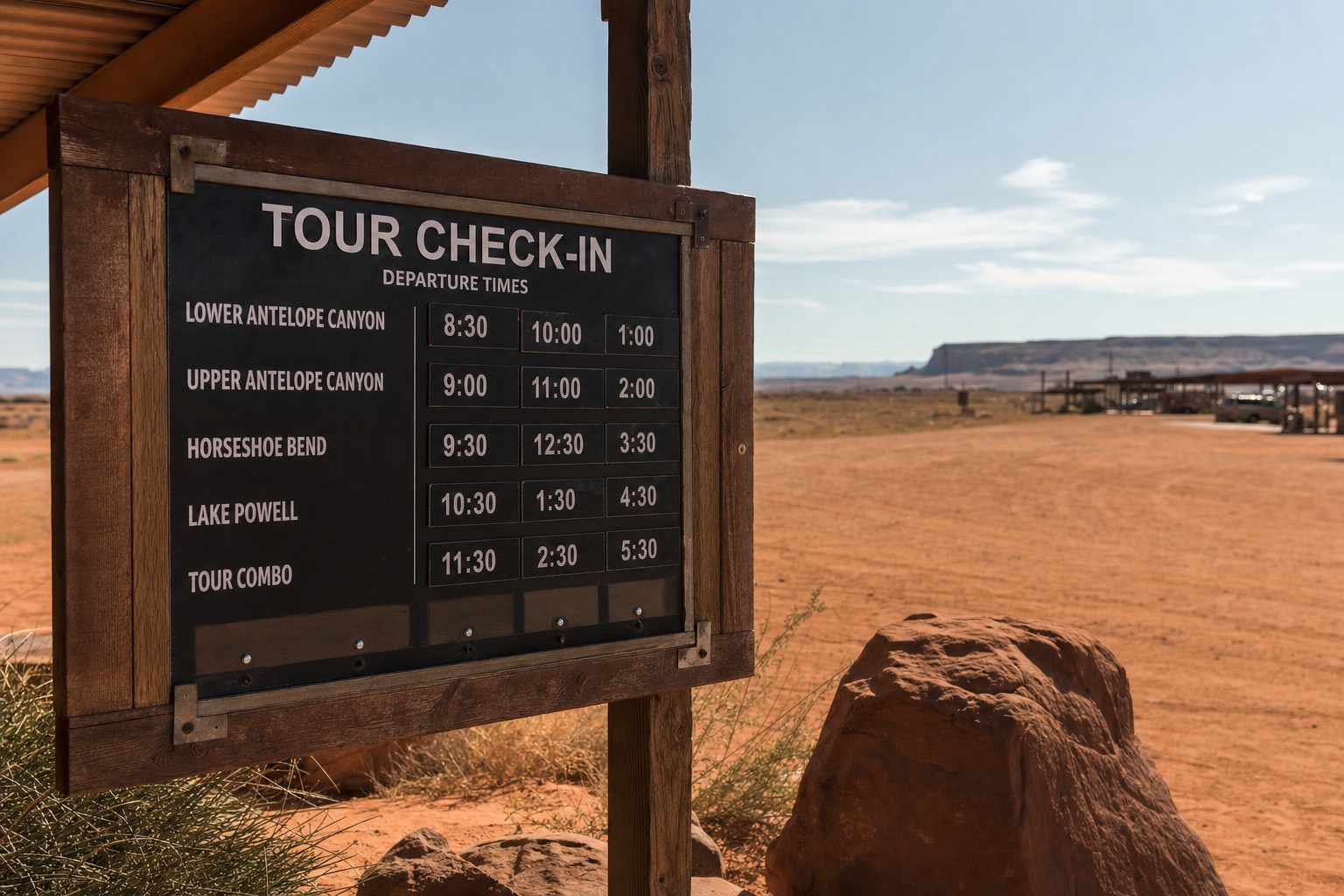
The question I field most often about this canyon is not about light or ladders. It is some version of "can we just show up?" and the answer decides whether a trip works. As a guide, I have watched people drive four hours to a gate that had nothing for them, because they treated a slot canyon like a trailhead. It is not one. It runs like a small airport: fixed departures, hard capacity, and a manifest with your name on it or not.
Quick take: every walk is a reserved, guided departure at a fixed time with a hard cap. Book on a platform or with an operator directly, but book ahead, because midday slots in beam season are reported gone months out. The $15 Navajo Nation permit rides on top of or inside the price depending on the product. Cancellation depends on the exact ticket: the checked AACT Upper and Lower Viator listings allow a full refund when canceled at least 24 hours ahead. Canyon X on Viator is nonrefundable for customer cancellations, while the checked GetYourGuide Canyon X listing allows cancellation at least four days ahead. Reconfirm the chosen option at checkout.
Why are there time slots instead of just tickets?
Because access is guided-only under Navajo Nation rules, and a slot canyon has a physical ceiling on how many people fit between its walls. Operators sell timed departures with fixed group sizes, one guide per group. When a departure's spots are gone, that time is gone. No standby line exists.
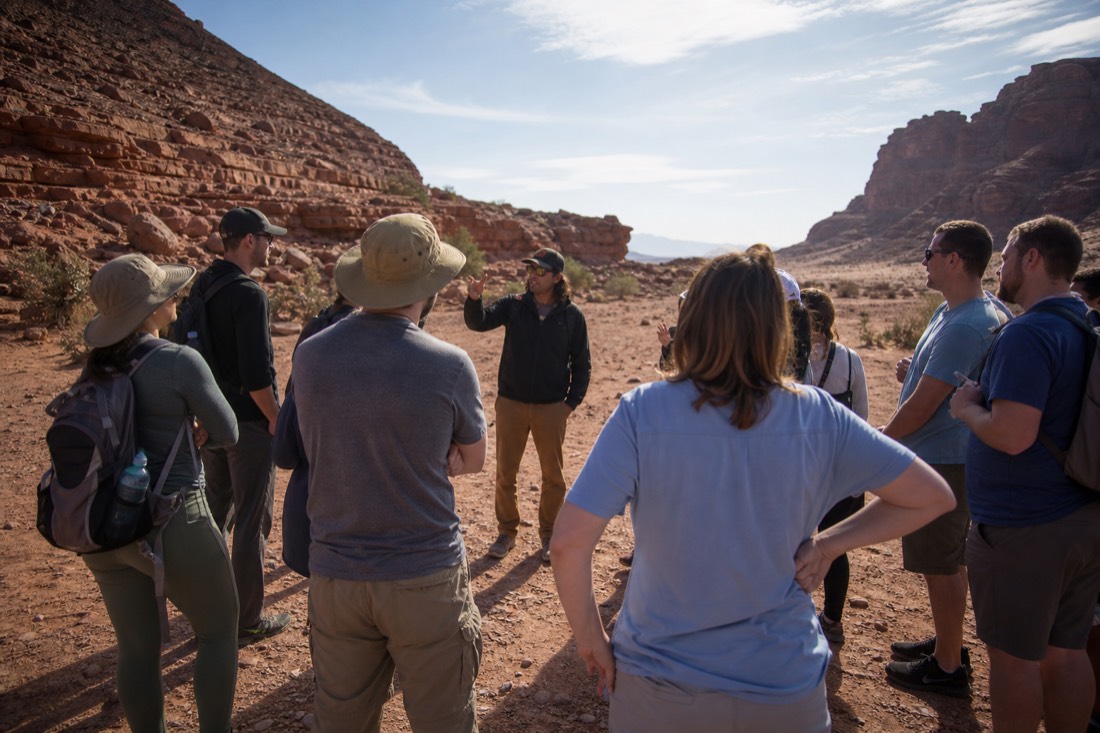
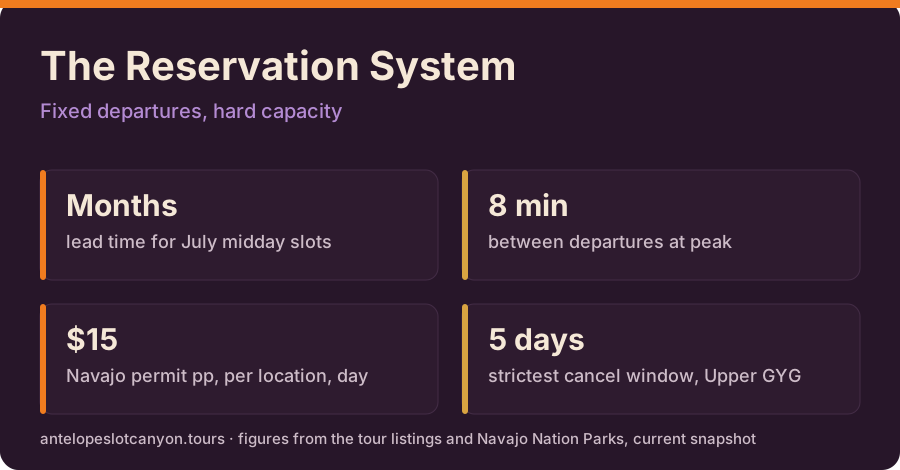
The structure comes from the land status. Every section of the canyon sits on Navajo Nation land, and the Navajo Nation Parks and Recreation roster lists the permitted companies allowed to take you in. Six Navajo-owned operators currently hold those permits. Each runs its own calendar of departures, and at the busiest section those departures leave in groups of about 10 to 15, a new one entering roughly every eight minutes at peak.
That cadence is why a "sold out" date is genuinely sold out. The system is already running near the ceiling the canyon allows. There is no overflow lot, no extra guide to call in, and, since access is guided-only, no legal way to walk in on your own. Reservations are not a formality here. They are the entire access model.
Should you book through a platform or the operator directly?
Both routes put you on the same guided departures. Operator sites sometimes open inventory earliest; platforms like GetYourGuide and Viator give you one account for everything, reviews you can compare at scale, and platform-backed refund handling. My call: compare both, then book the channel whose cancellation terms fit your dates.
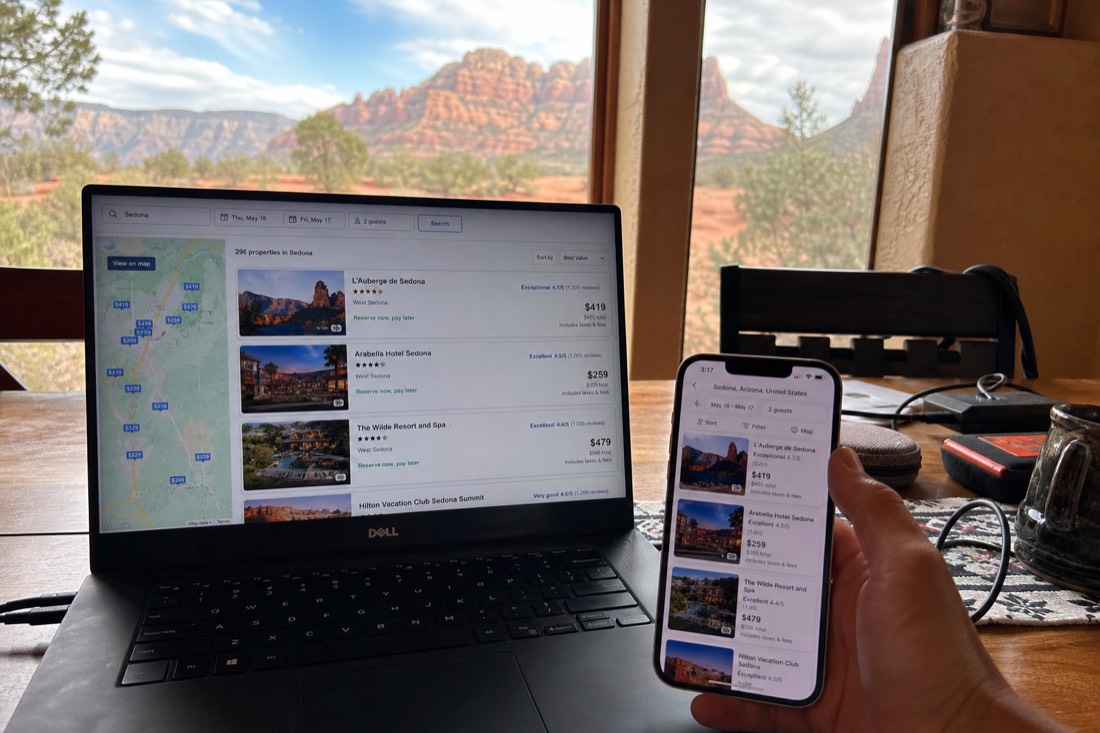
Here is the honest comparison, without pretending either channel is always right.
| Factor | Operator direct | GetYourGuide / Viator |
|---|---|---|
| Inventory | Their own calendar, sometimes opens first | Aggregated across operators and sections |
| Social proof | Their own testimonials | Thousands of platform reviews per listing |
| Cancellation terms | Set per operator | Set per listing, shown before you pay |
| Rebooking after weather | Handled by the operator | Handled through the platform with the operator |
| Comparing sections | One company at a time | Side by side in one search |
Operators like the long-running Upper Antelope company and Ken's Tours at Lower are exactly who you end up walking with either way, since platforms sell their departures rather than competing with them. What the platforms add is comparison: you can weigh a 4.7 from 8,861 GetYourGuide reviews against a 4.9 from 7,298 on Viator for the same canyon in two tabs. The full price picture, permits included, lives in the tickets and cost guide.
What sells out first, and how far ahead should you book?
Midday slots in beam season, roughly late March through mid-October, go first and are reported selling out months in advance for July. Morning departures fill last. Winter dates are the most forgiving. Booking months ahead is the norm for peak dates; walk-ups are unlikely to find anything.
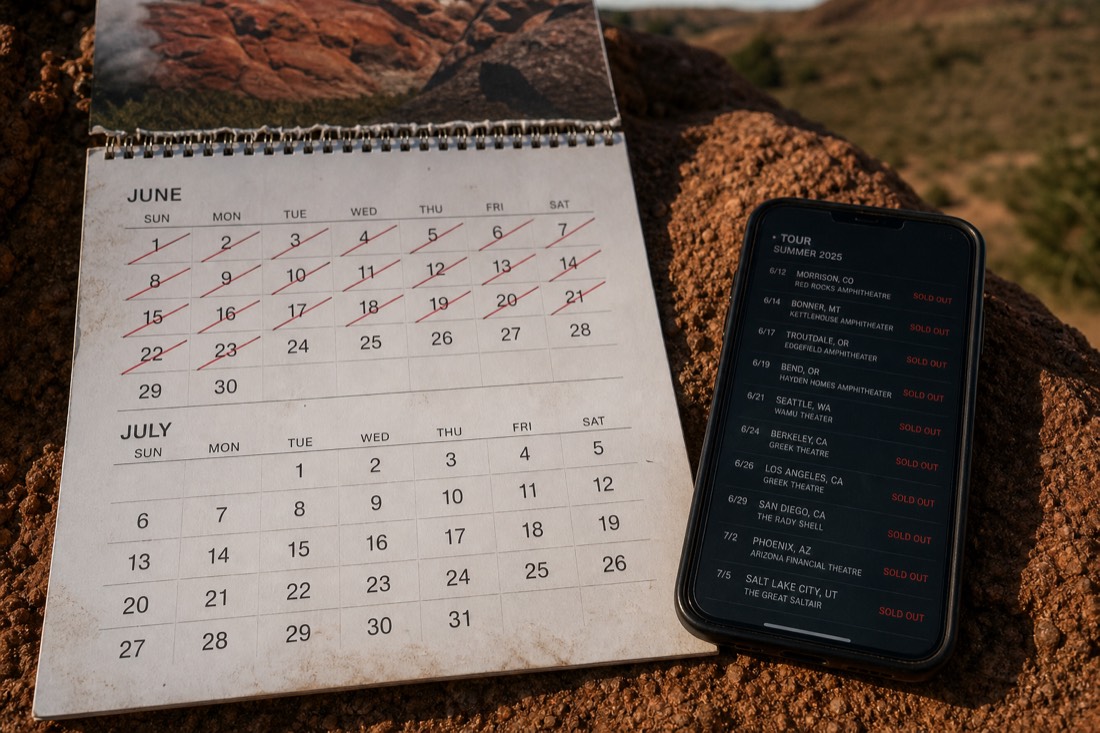
Demand follows the light. The midday window, roughly 11am to 1pm, is when beams drop to the floor of the busiest section, so those departures carry both the photographers and the crowds. Visitor threads from this past winter describe July midday departures gone months out, with mornings the last to sell.
| Your target | Realistic booking lead time |
|---|---|
| Midday slot, June to August | Several months ahead |
| Midday slot, beam-season shoulder (Apr, May, Sep, early Oct) | Six to eight weeks or more |
| Morning slot, summer | Weeks ahead, sometimes days |
| Any slot, November to February | Days to weeks ahead |
| Same-day walk-up, any season | Unlikely to succeed |
Treat these as planning bands rather than promises, since a single busload can eat a quiet date. The one reliable rule: the earlier in the day the departure, the longer it stays open. That fact also powers the weather playbook, because after a storm cancellation the open inventory is almost always tomorrow morning.
What are the cancellation rules on each listing?
There is no single policy. Read the window before you pay, not after. Cancellation depends on the exact ticket: the checked AACT Upper and Lower Viator listings allow a full refund when canceled at least 24 hours ahead. Canyon X on Viator is nonrefundable for customer cancellations, while the checked GetYourGuide Canyon X listing allows cancellation at least four days ahead. Reconfirm the chosen option at checkout.
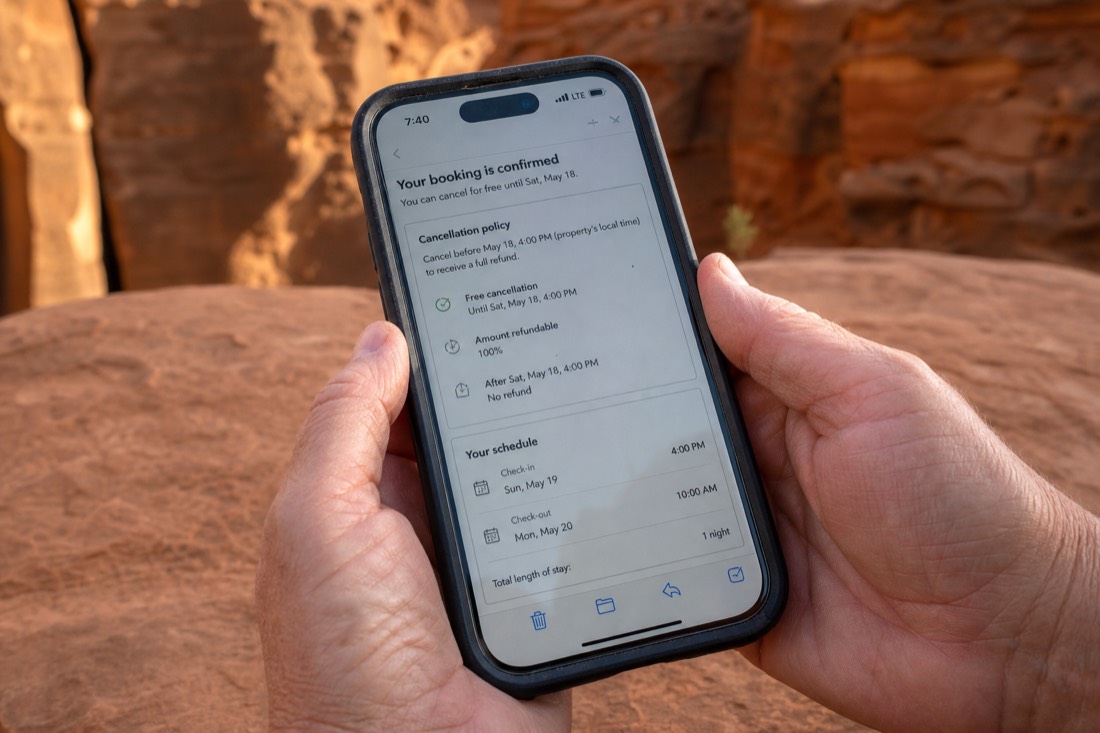
I pulled the current terms from the listings we cover, because this is where bookings quietly go wrong.
| Listing | Platform | Your cancellation window |
|---|---|---|
| Lower Antelope Canyon hiking tour | Viator | Free cancellation per the listing |
| Lower Antelope prime-time entry | GetYourGuide | Confirm on the listing before booking |
| Upper Antelope with AACT | Viator | Cancel up to 24 hours ahead |
| Antelope Canyon X guided walk | GetYourGuide | Cancel up to 4 days ahead |
| Lake Powell kayak and hike | Viator | Free cancellation per the listing |
If your dates sit in storm season, the loose-window products are worth real money. Always reconfirm the live policy on the listing itself, since platforms update terms. Cancellation depends on the exact ticket: the checked AACT Upper and Lower Viator listings allow a full refund when canceled at least 24 hours ahead. Canyon X on Viator is nonrefundable for customer cancellations, while the checked GetYourGuide Canyon X listing allows cancellation at least four days ahead. Reconfirm the chosen option at checkout.
How does the $15 Navajo Nation permit work?
Every visitor pays a $15 per person, per location, per day Navajo Nation entry fee, raised from the old $8 rate. Most listings collect it on top of the tour price, in cash or at checkout, while some, like the Upper GetYourGuide ticket, bundle it in. Check the inclusions line on your listing.
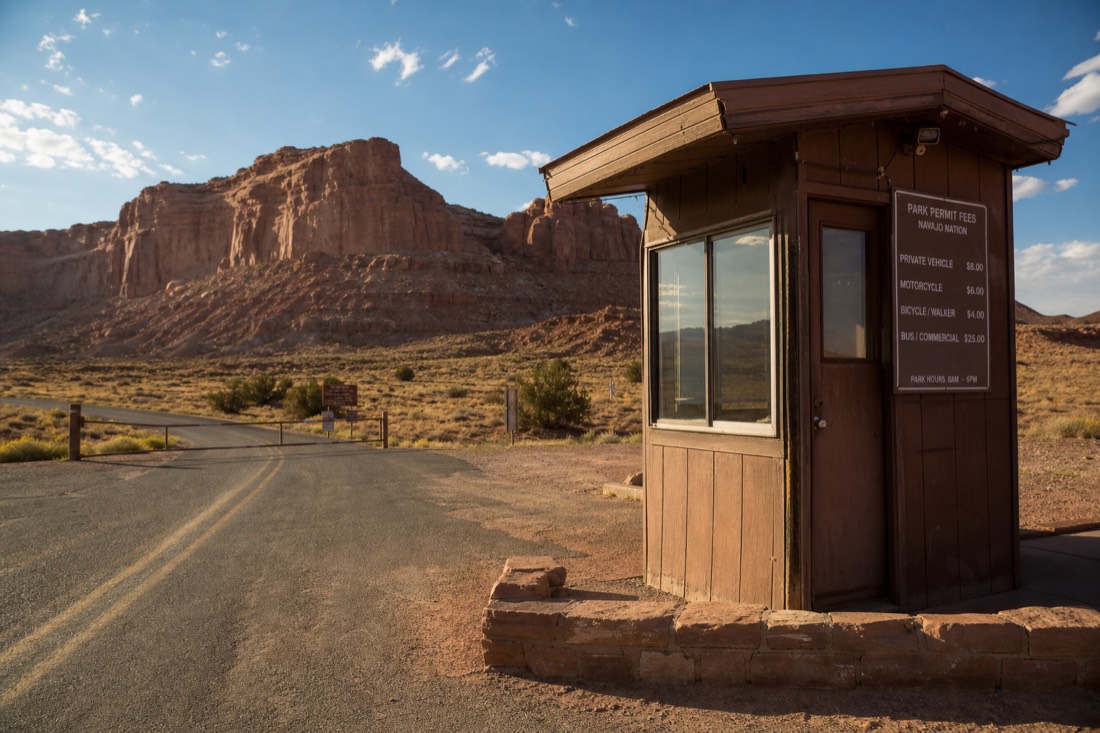
The fee is not a booking-platform surcharge. It goes to Navajo Nation Parks and Recreation, the tribal agency that manages the canyon, and it funds the conservation and safety apparatus that keeps a fragile slot canyon survivable at modern visitor volume. Operators collect it and remit it to the tribe.
Practical notes worth having. The fee is per location, so a day that combines two canyon sections pays it twice. Reservations in someone else's name do not dodge it; everyone standing at the gate pays. And if your listing says "permit included," that is a real price advantage worth counting when you compare products, so read the inclusions line as carefully as the price.
What happens to your reservation when weather cancels the tour?
If the operator cancels for flood risk, you get a refund or a rebooking as standard practice, regardless of the listing's normal window. Your job in the first hour is speed: ask about the next morning on the spot, because post-cancellation inventory concentrates in early departures and evaporates fast.
Operator cancellations flip the power dynamic in your favor. The strict windows in the table above govern changes you initiate. When the company pulls the departure over a flood watch, the platform and operator sort you out, and the cancellations run mid-June through September whenever storms threaten the drainage. What the system cannot give you is a free extra day in Page, which is why a flexible itinerary is the real insurance. The monsoon backup plan covers the salvage hour by hour, and the weather rundown explains which conditions trigger the call in the first place.
One last habit from the guiding side. Screenshot your confirmation, note which clock your operator runs on, and arrive early, because in summer Page and the surrounding Navajo Nation sit an hour apart and the manifest does not wait. A reservation here is a precise thing. Treat it that way and the canyon does the rest.
Your next booking step
Lower Antelope with a Navajo guide
Have a travel date in mind? A timed walk among Lower’s sculpted walls, with entry and the Navajo permit included. Check the date before arranging the rest of this part of your trip.
General starting point — confirm the exact party and date
Select a date to load the Viator schedule. Availability and final price are confirmed on Viator.
Check dates for Lower Antelope with a Navajo guide
Ken’s Tours, Lower entrance; arrive 30 minutes early. Return to the same site. Steel stairs and narrow passages; no bags or tripods. Not recommended during pregnancy or with spinal/cardiovascular conditions. Customer cancellation: full refund at least 24 hours before departure; reconfirm at checkout.
Compare routes, adjust your plan & budget
Fixed time slots, hard capacity, and listings that sell out months ahead: how booking a slot canyon walk near Page really works, which cancellation windows apply, and how the $15 Navajo permit fits in. These are different experiences, not interchangeable admission tickets. All listed guiding is in English.
A timed walk among Lower’s sculpted walls, with entry and the Navajo permit included. 60 minutes; English; from Page. Ken’s Tours, Lower entrance; arrive 30 minutes early. Return to the same site. Steel stairs and narrow passages; no bags or tripods. Not recommended during pregnancy or with spinal/cardiovascular conditions. Customer cancellation: full refund at least 24 hours before departure; reconfirm at checkout.
Upper’s beam corridor with a Navajo guide; fees and taxes included. 80 minutes; English; from Page. Adventurous Antelope Canyon Tours, Highway 98; arrive 30 minutes early. Return to the same base. Ages 8+; moderate fitness. Sandy walking and the outdoor stair/hill exit; no guaranteed beams. Not recommended during pregnancy or with spinal/cardiovascular conditions. Customer cancellation: full refund at least 24 hours before departure; reconfirm at checkout.
Two Canyon X sections on Taadidiin’s guided hiking route. Choose the hiking option. 90 minutes; English; from Page. Taadidiin Tours, Highway 98; arrive 30 minutes early, using Arizona/Phoenix time. Return to the same site. Steep access trail. Permit is listed as included but the API’s old fee amount conflicts with current operator information; confirm the final total. Guide service fee extra. No tripod on hiking option. Nonrefundable for customer cancellation on Viator; read the exact weather-cancellation terms.
Affiliate links: we may earn a commission at no extra cost to you. Schedule dates are not confirmed seats.